Long-term value
Does it build something users accumulate over time, or is it a one-time moment?
Retention strategy / Amazon Music
A 1-month design sprint with Amazon Music exploring how music memory, fandom, and context can make users feel invested enough to stay.
The challenge
Amazon Music is seeking a Customer Experience (CX) strategy to improve retention across its tiered offerings. The goal is to create a differentiating product that engages users, keeps them active month-over-month, and makes Amazon Music indispensable in their daily lives.
The solution
Our solution: three new features added to Amazon Music that help users build a personal relationship with the music they listen to.
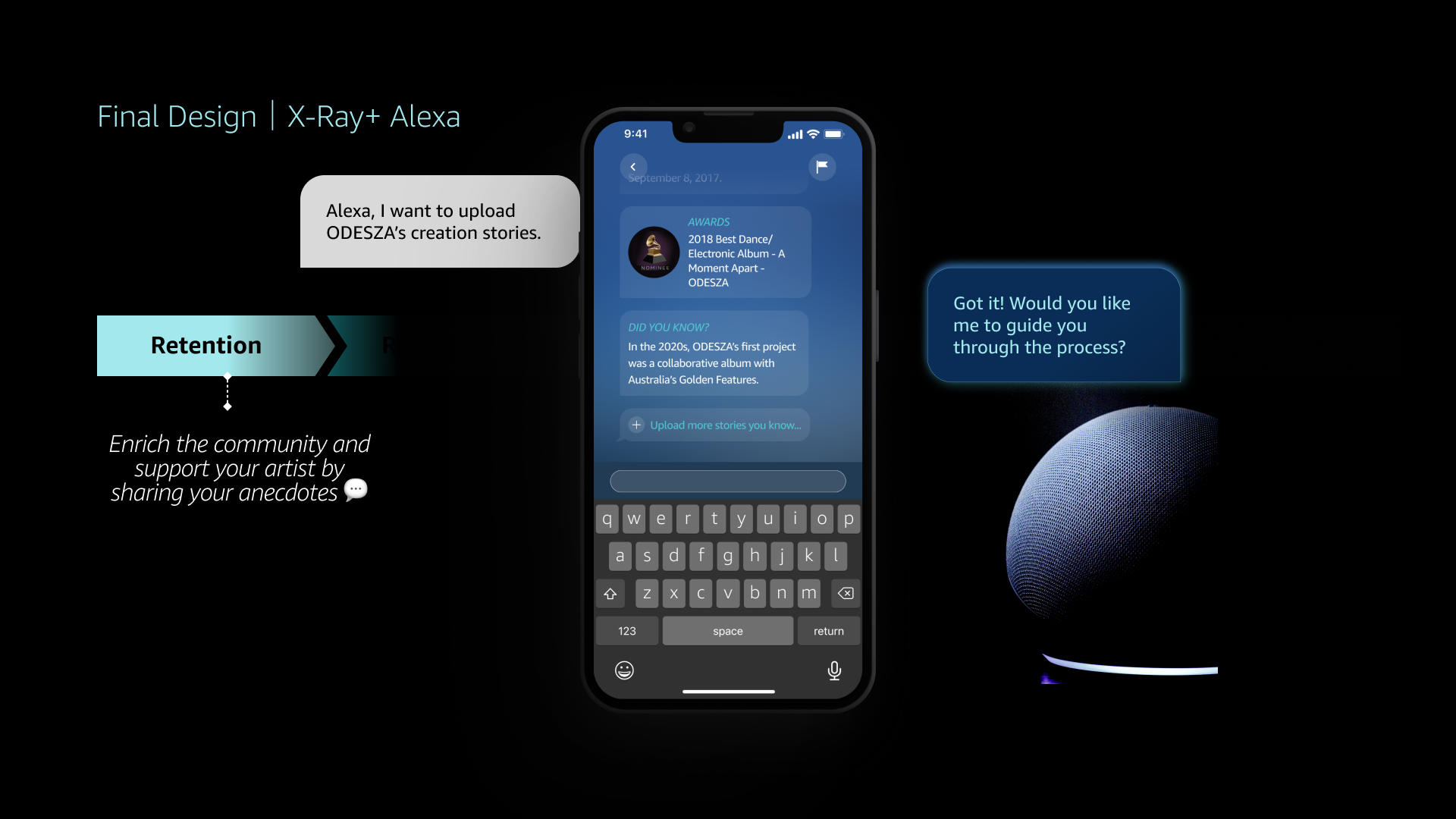
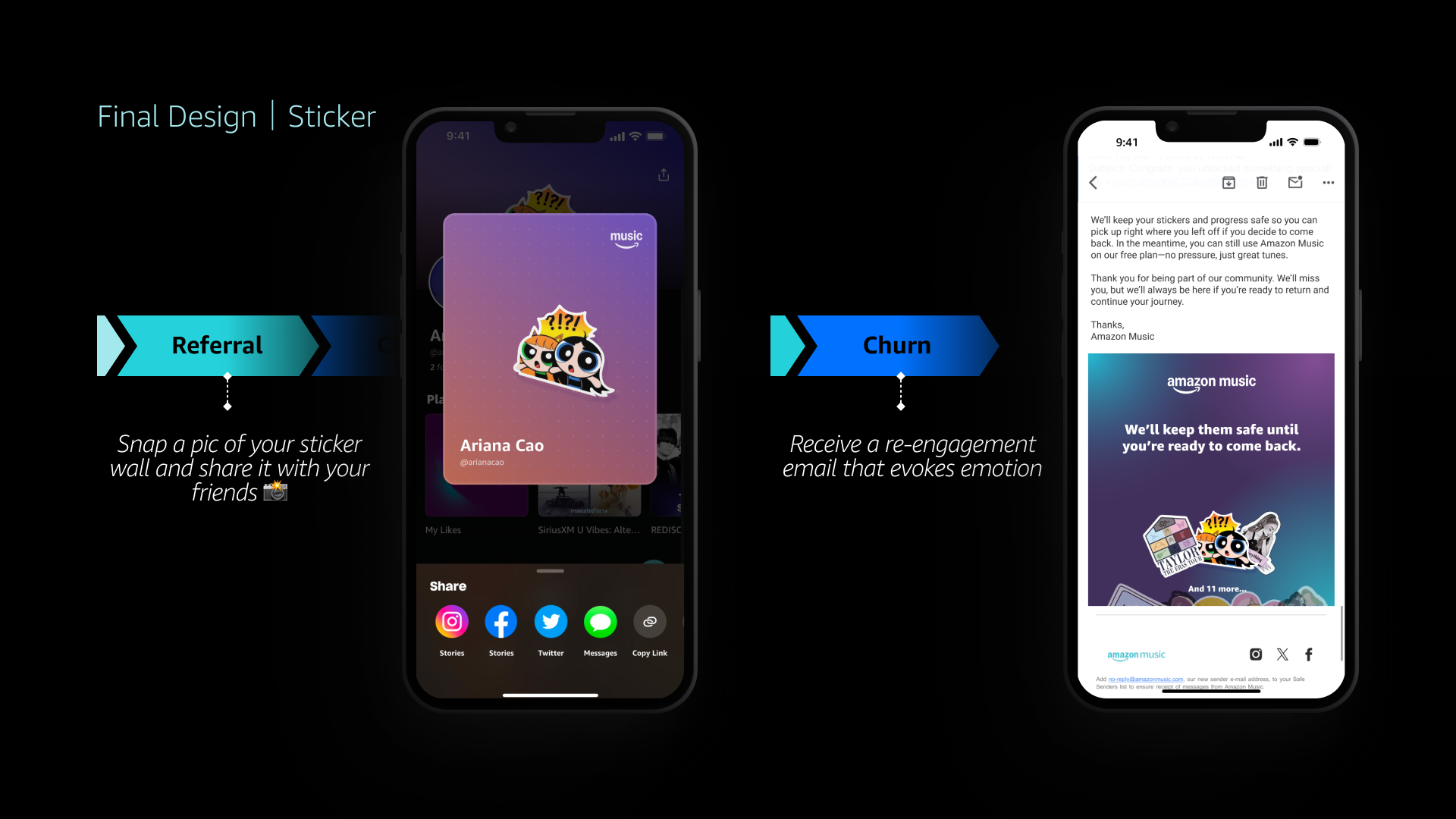
The features include an expanded X-Ray for community storytelling, a memory journal tied to listening history, and a sticker collection system tied to artist fandom.
A redesigned story layer that helps listeners understand the people, references, and context behind a song while they are already listening.
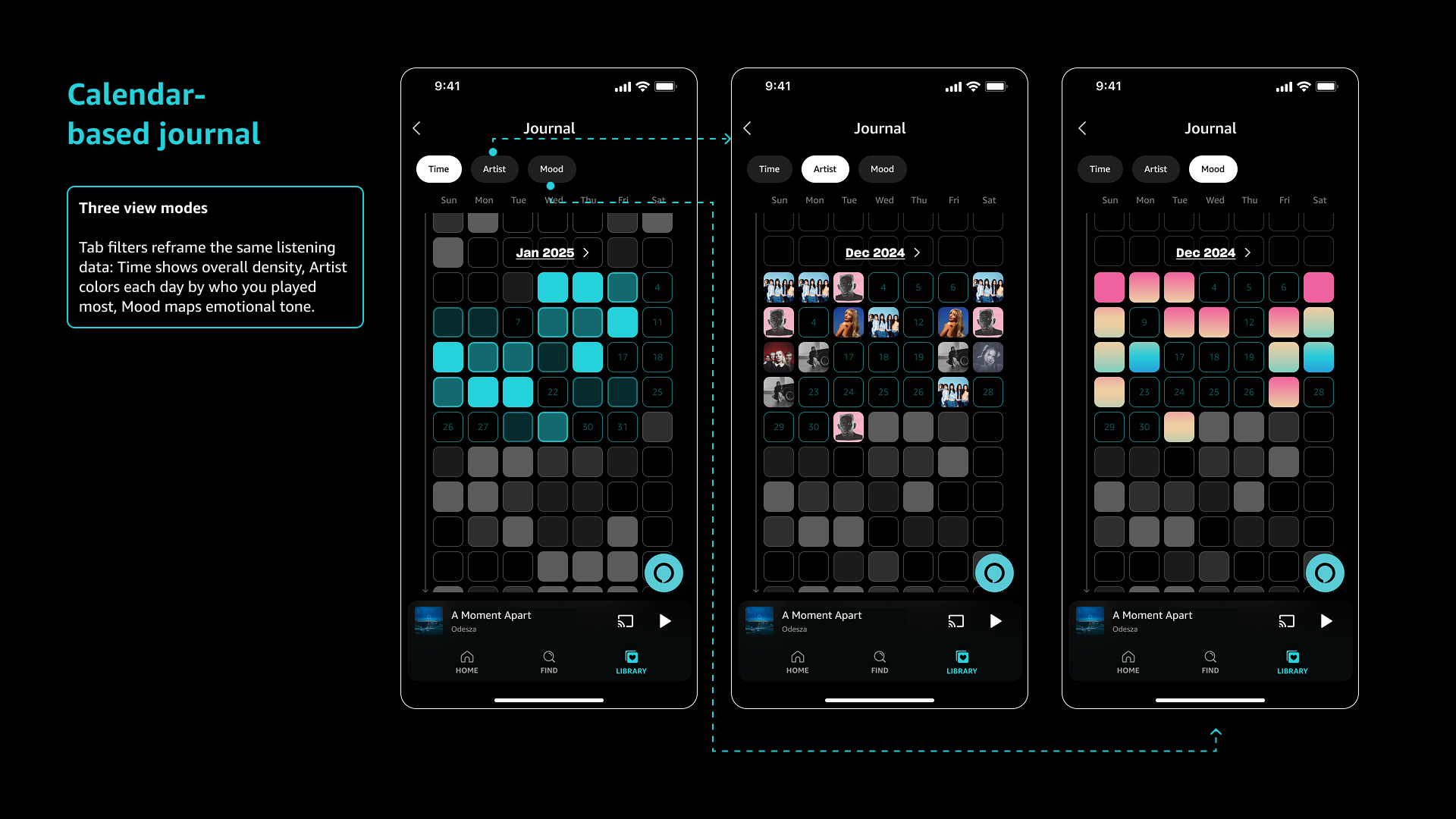
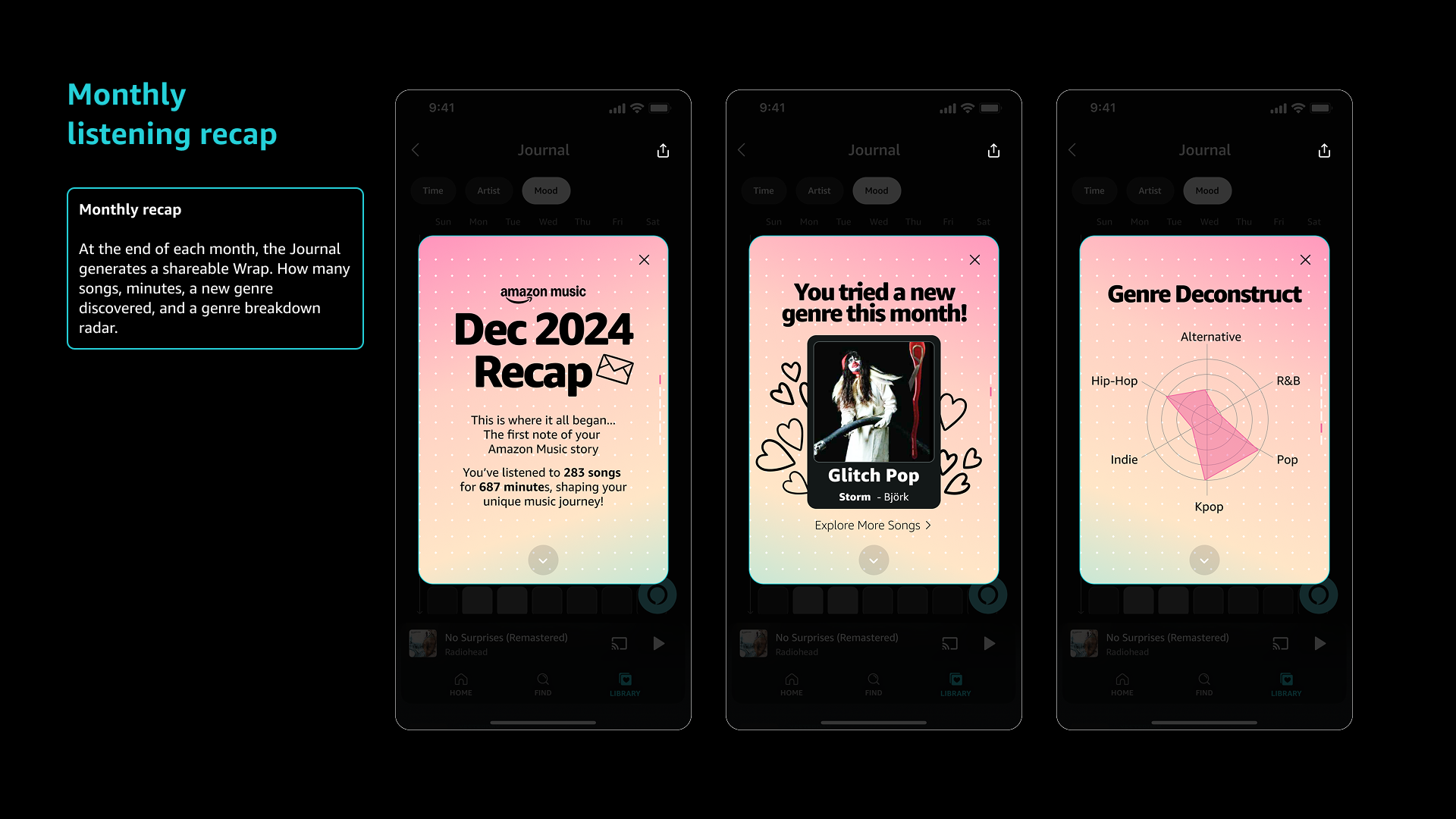
A private listening archive that turns everyday plays into memories users can revisit by time, mood, and personal meaning.
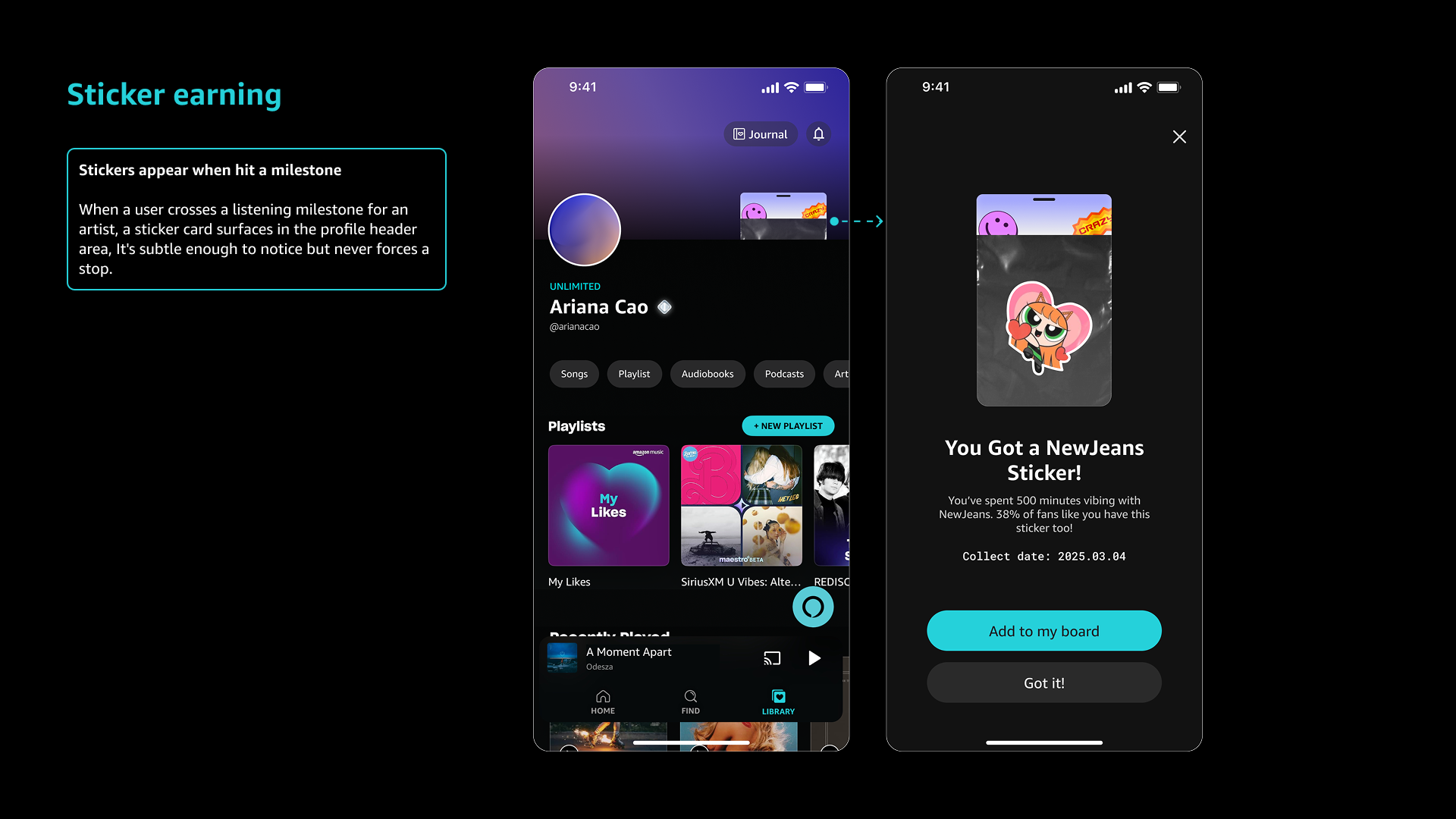
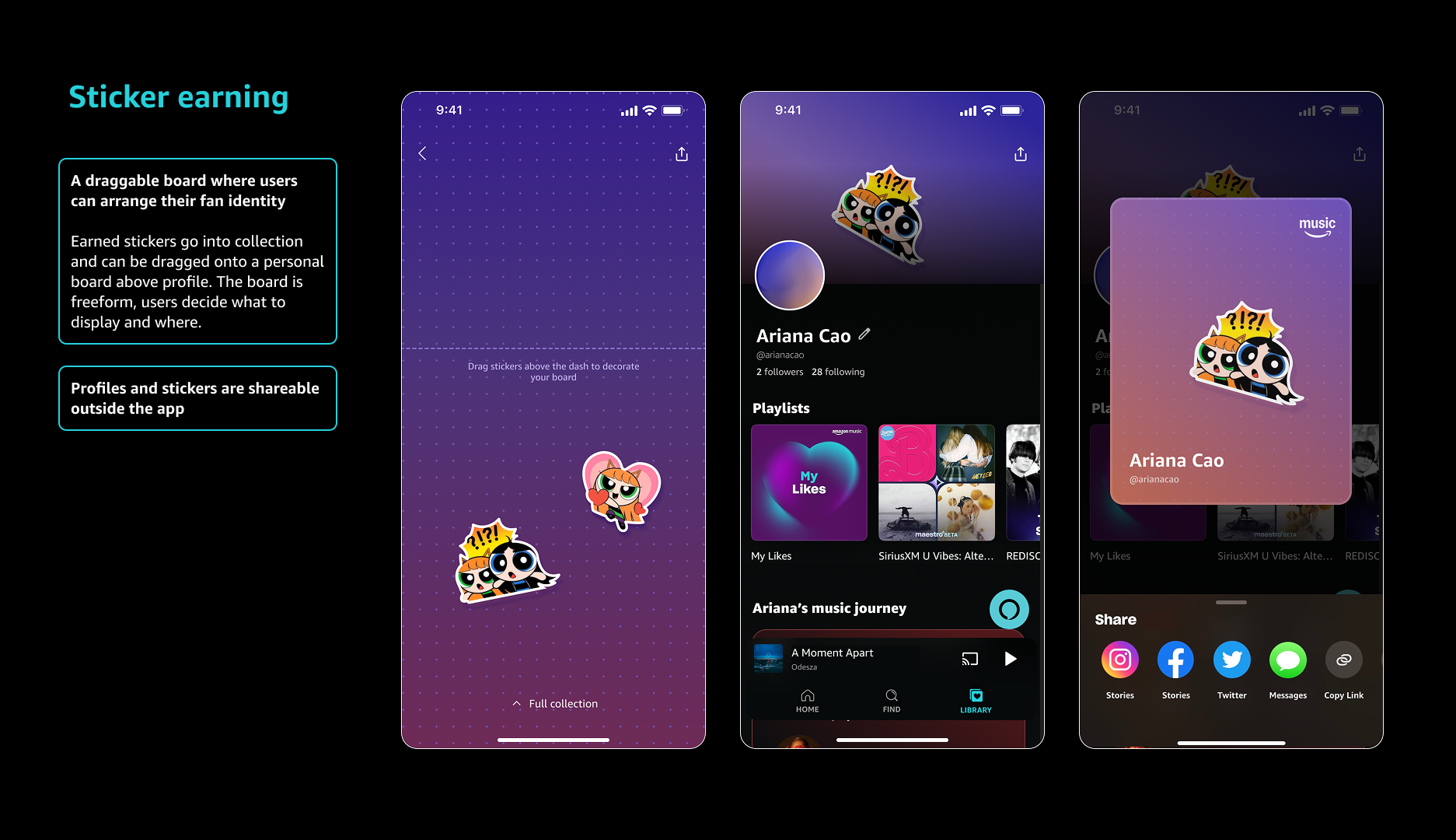
Collectible fan badges tied to real listening milestones, designed to make artist loyalty visible without interrupting playback.
Research
We started by understanding why users leave, and what makes them stay. We analyzed Amazon Music feedback from Reddit, ran a survey, and interviewed listeners across platforms to find patterns the product team hadn't yet named. We used AI tools to help analyze the data: NotebookLM, ChatGPT, and Notion AI.
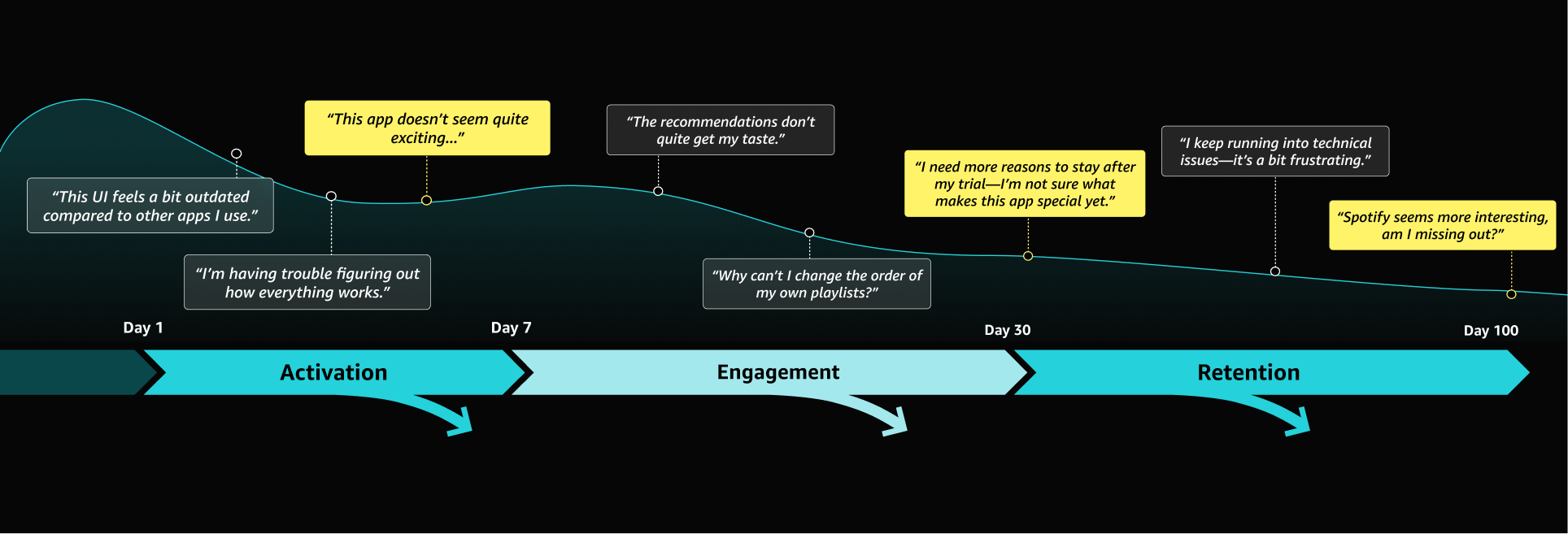
The Reddit data told us what users complain about: outdated UI, weak recommendations. The interviews told us something more interesting: what people actually want from a music platform has little to do with the music itself.
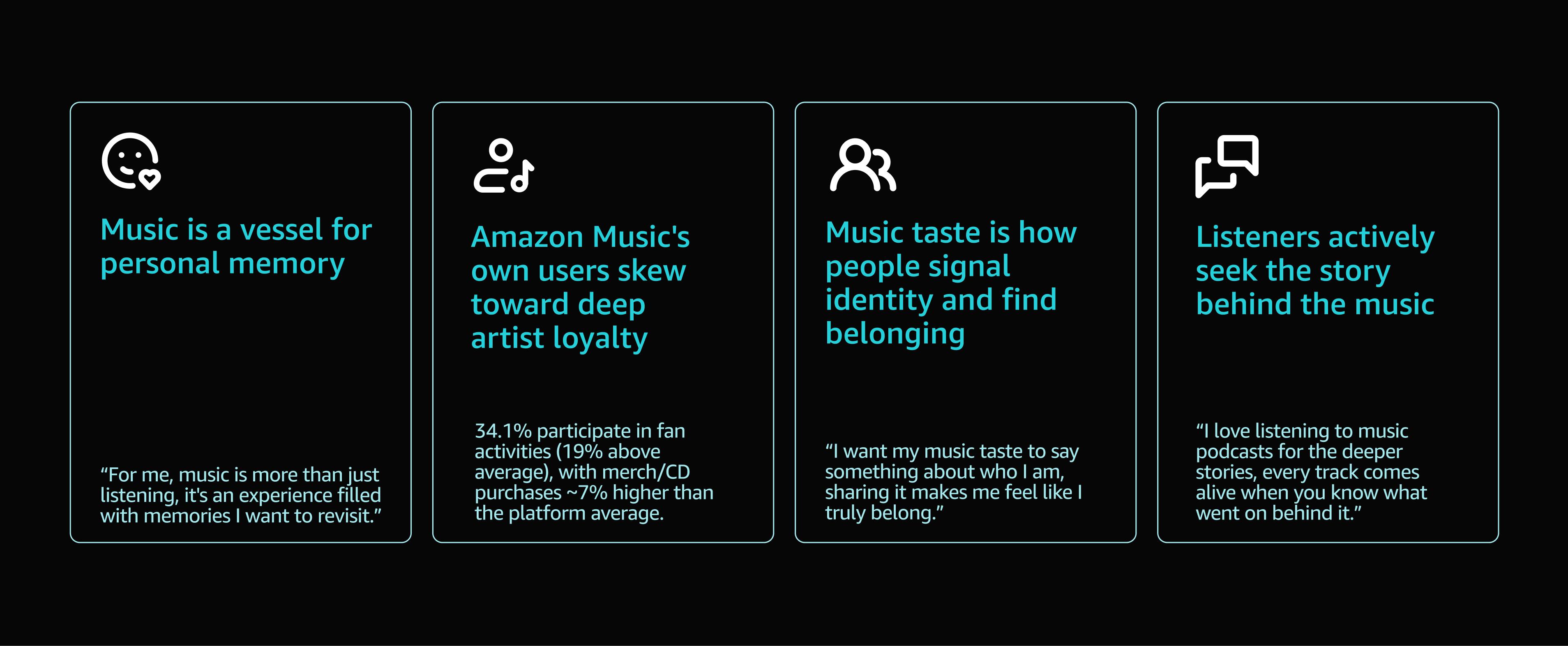
What we heard
What this means for retention
To better understand how we can increase Amazon Music's retention, we mapped each insight to a behavioral or psychological model that explains why it drives retention.
Music is the strongest trigger for episodic memory. A platform that surfaces those moments creates value no algorithm can replicate.
People stay where their identity is visible. When a platform reflects who you are, switching means losing that self-expression.
Users who curate, collect, and share build switching costs naturally. The more they put in, the more they have to lose by leaving.
Curiosity loops drive active return behavior. Users come back to close the gap between what they know and what they want to know.
All four retention drivers are about what happens around music, not the music itself. Amazon Music competes on catalog and price. None of its competitors have built the layer above listening.
Ideation
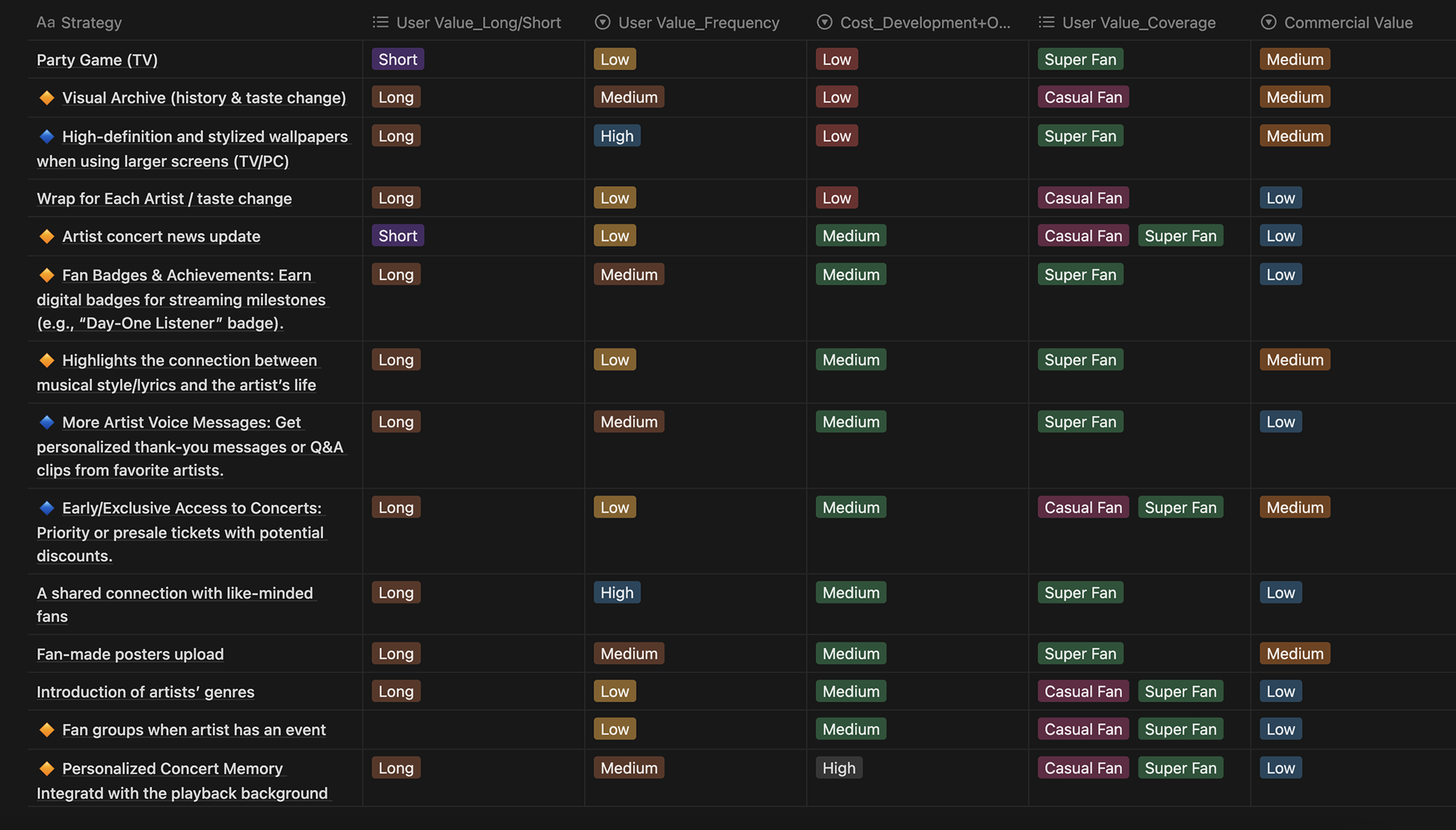
The four insights opened up a broad opportunity space. To narrow it, we evaluated each idea against four criteria, and looked specifically for solutions that could serve both user types without requiring Amazon to rebuild its core infrastructure.
Does it build something users accumulate over time, or is it a one-time moment?
Will users encounter it on every listen, or only occasionally?
Can it extend Amazon's existing infrastructure, or does it require building from scratch?
Does it serve casual listeners, super fans, or ideally both?
Selected
Selected
Selected
The three selected features were the only ideas that scored long-term, high frequency, and served both casual listeners and super fans. They also all extend infrastructure Amazon already has — listening data for the Journal, X-Ray for storytelling, and user profiles for stickers — rather than requiring something built from scratch.
How it works
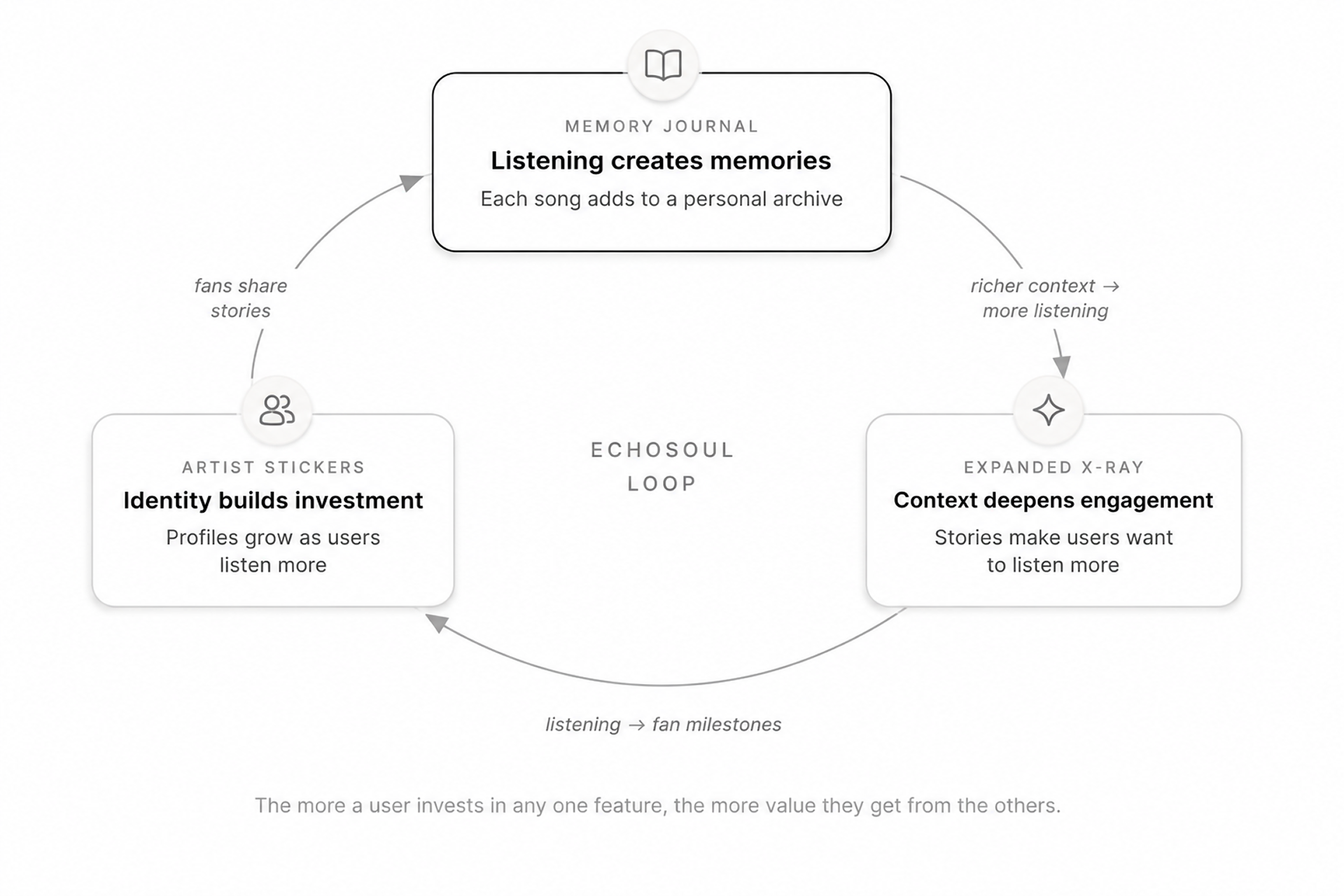
Together, they create a loop that a user who engages with one is naturally drawn into the others, and the more they invest, the harder it is to leave.
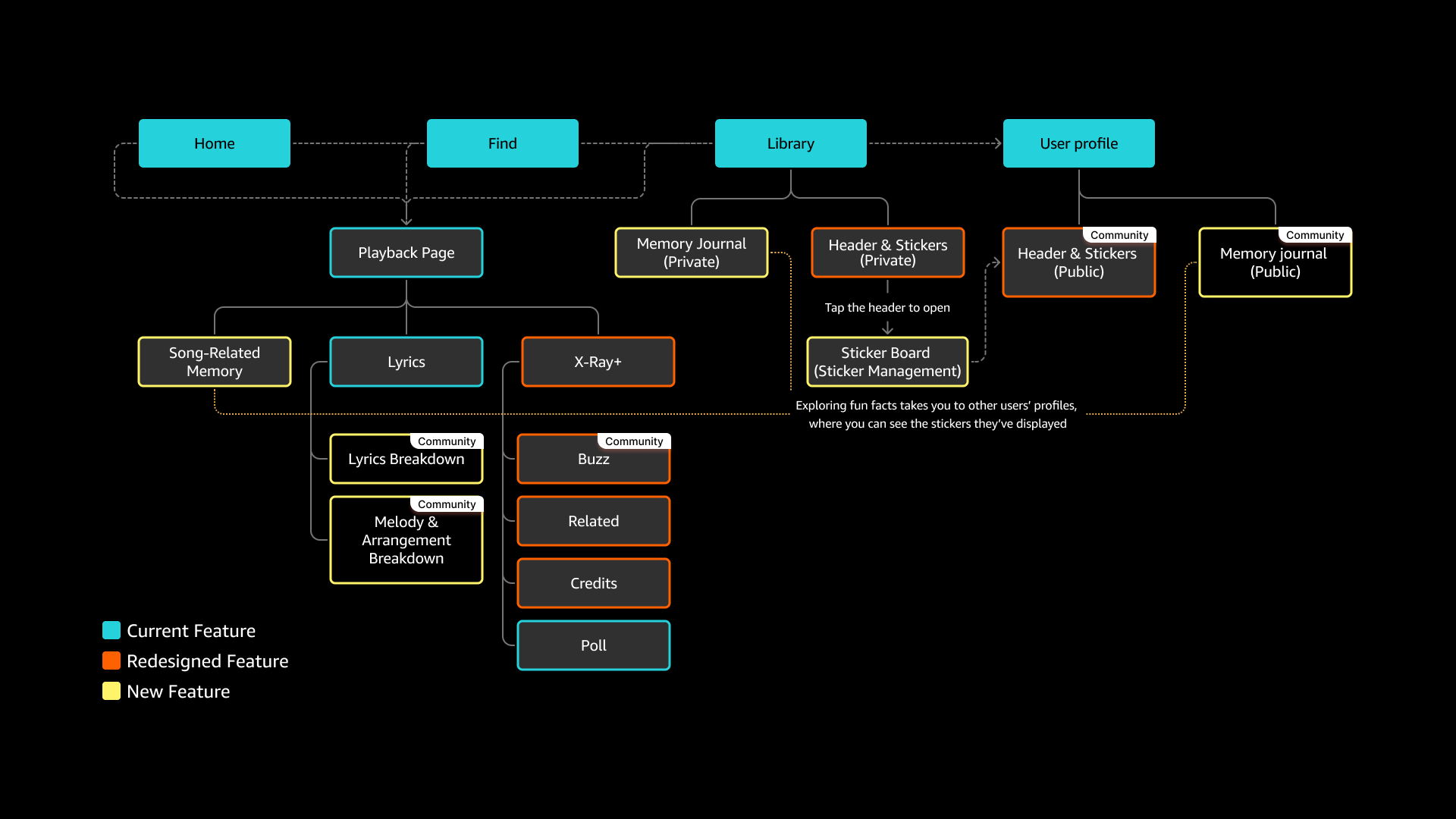
In order to integrate the new designs, we began by looking at Amazon Music's existing structure to find natural entry points for new features. Our aim was to extend the experience in a way that felt seamless to users and built on Amazon Music's strengths.
Below is how we eventually mapped out our features onto their information architecture.
Final design
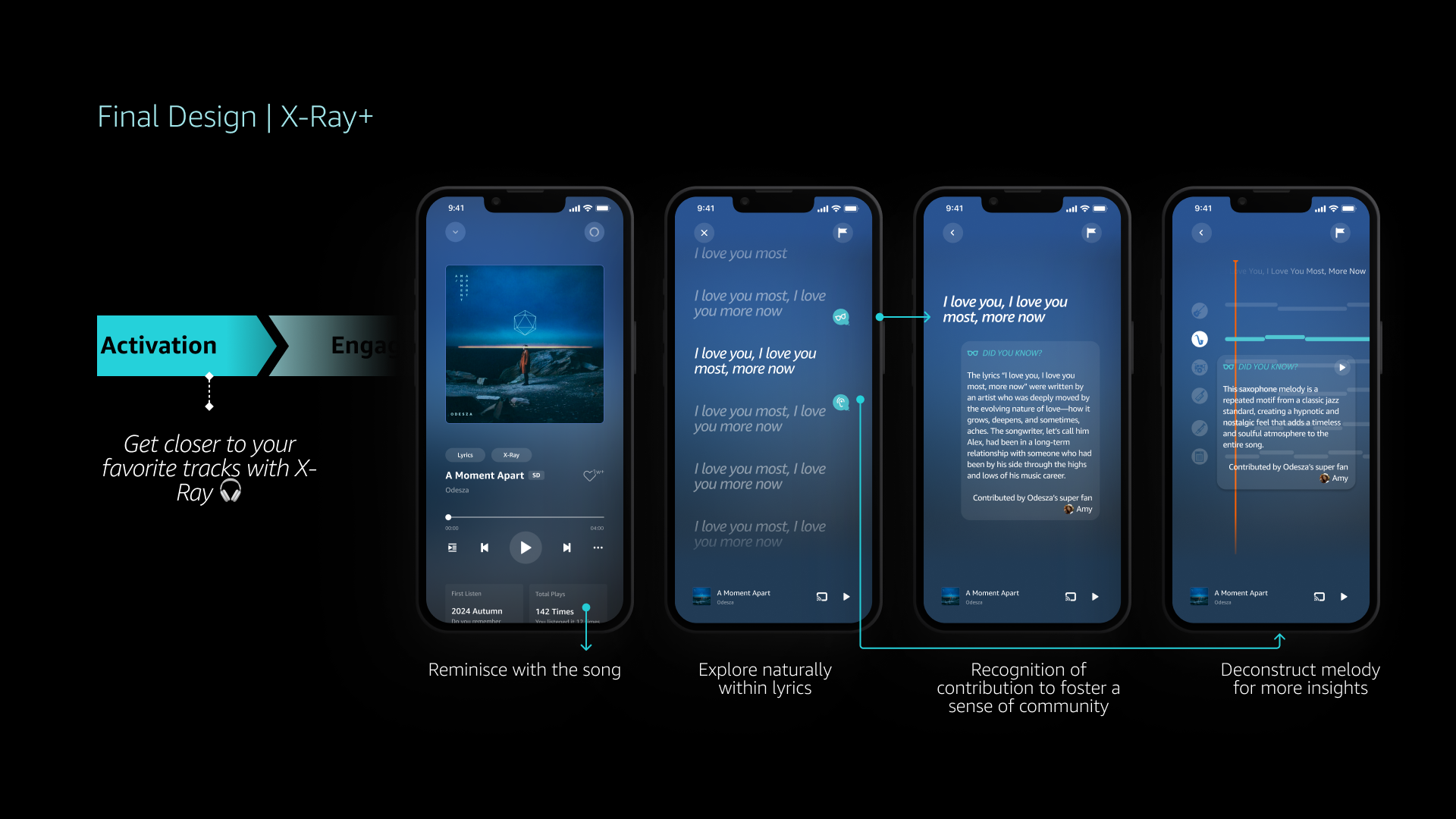
↳ Insight: Listeners actively seek story and context behind music
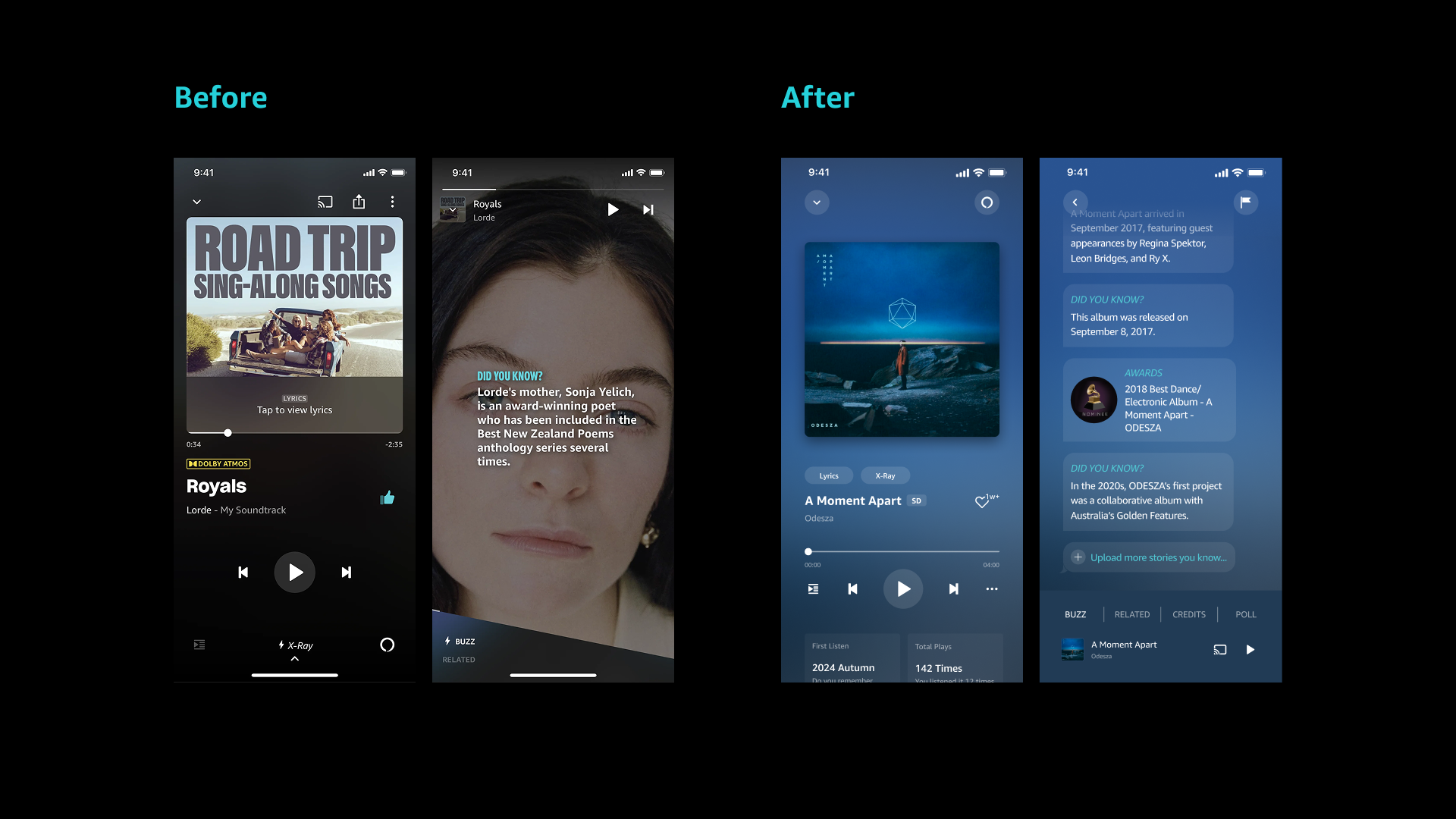
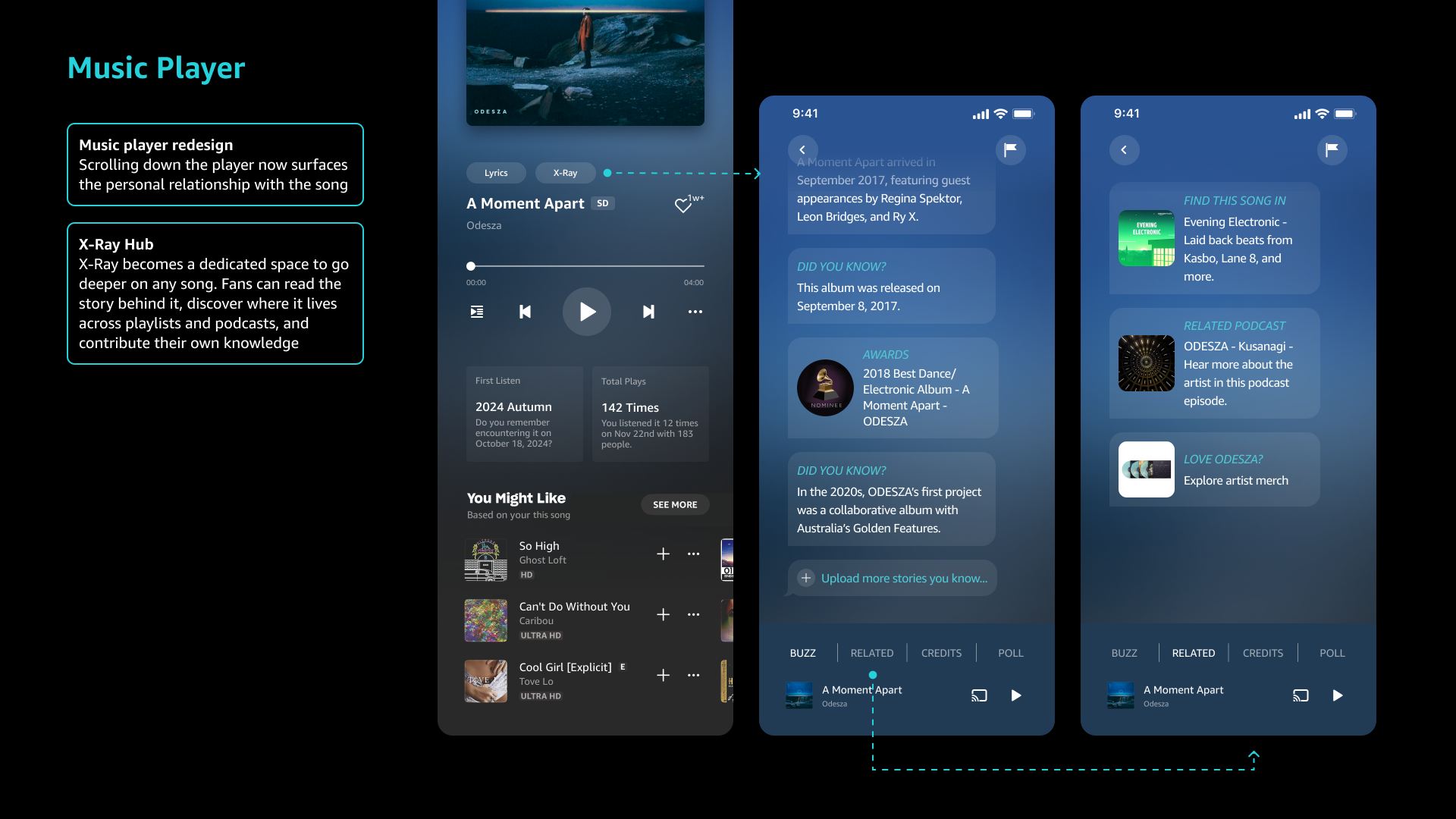
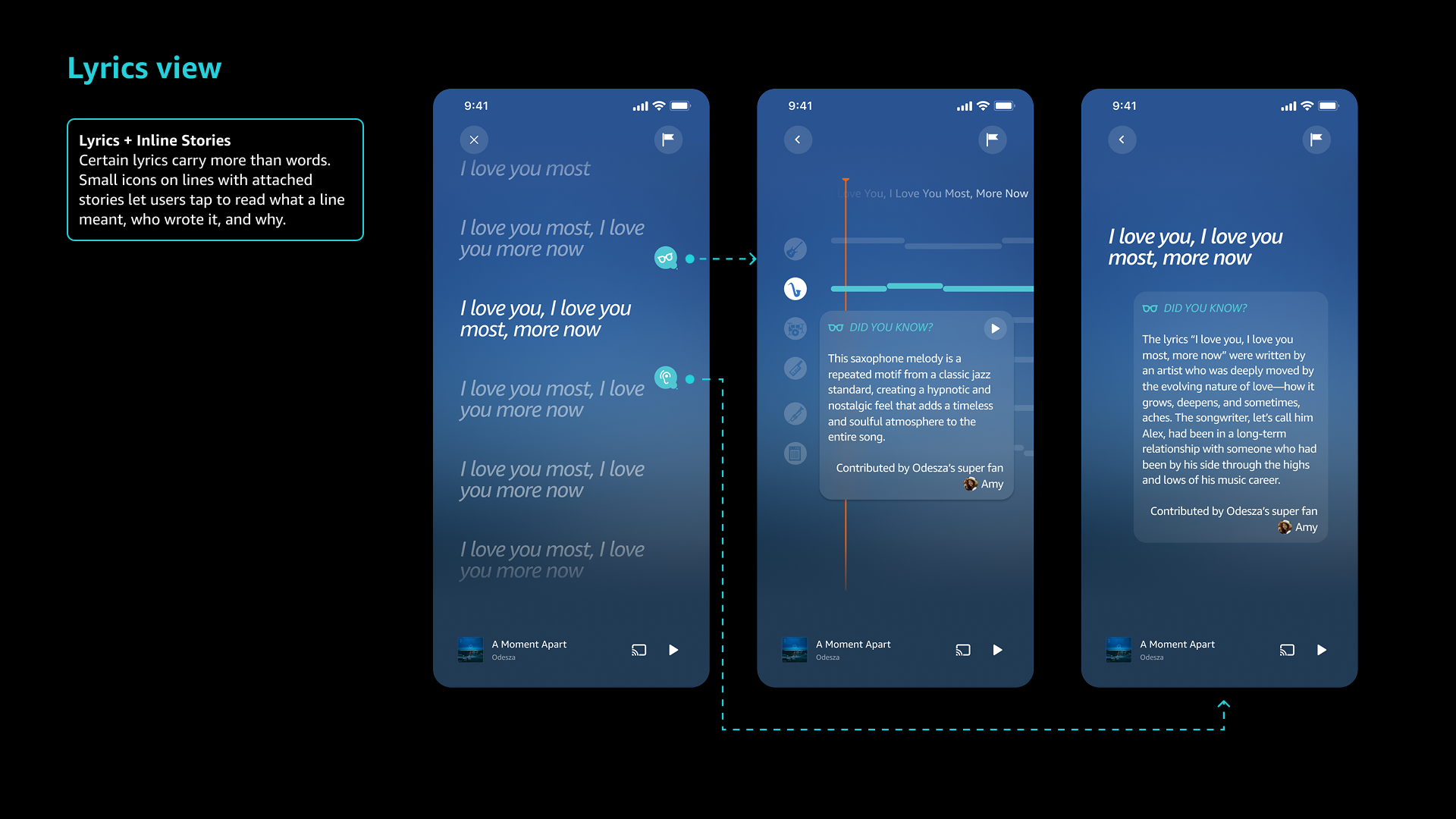
X-Ray already existed, but as a hidden gesture with no structure. We redesigned it in three layers: the music player itself, the X-Ray hub, and what happens inside the lyrics view.
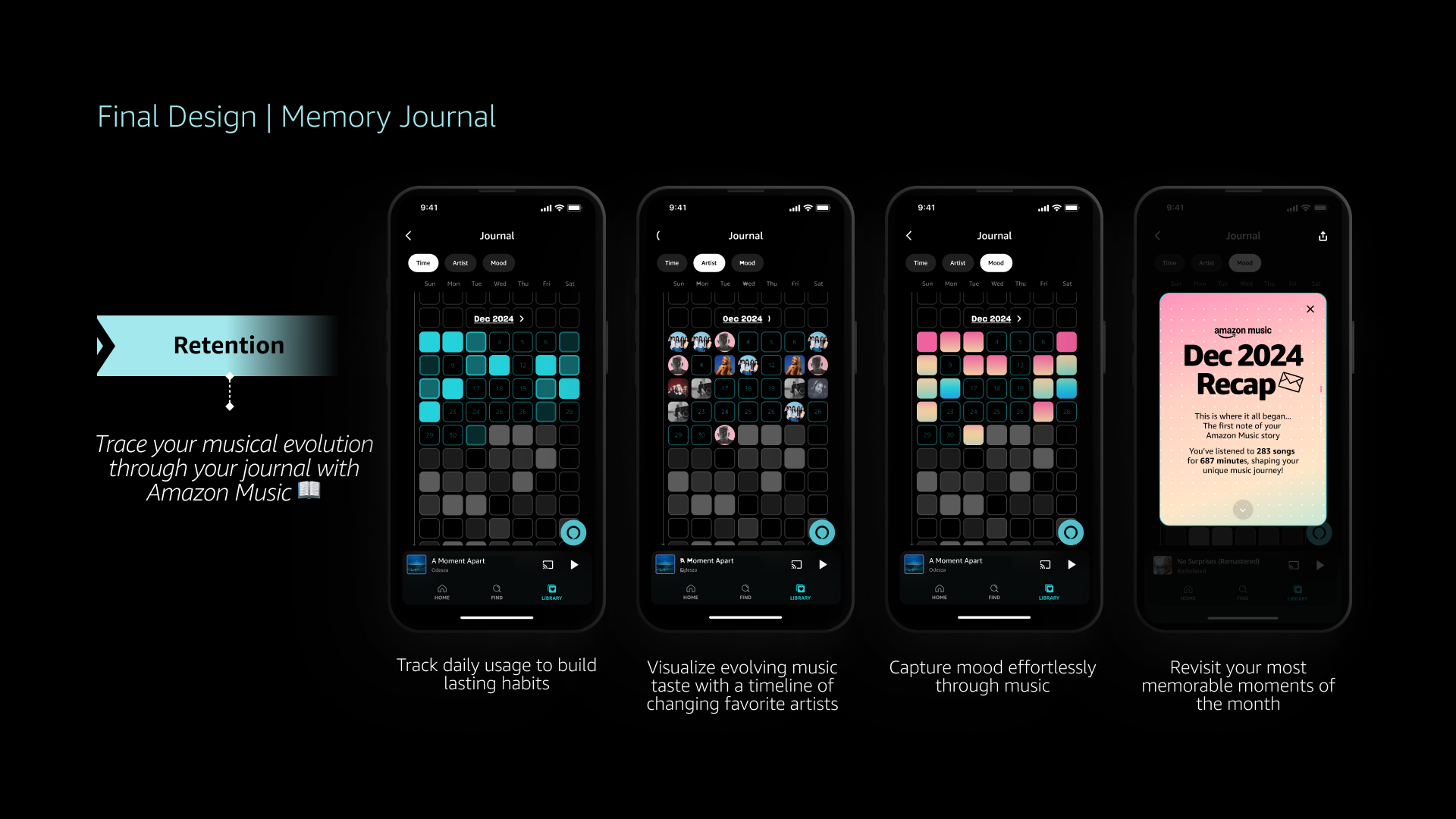
↳ Insight: Music is tied to personal memory
Every song listened to is quietly logged, building a personal archive that visualizes listening behavior over time. Two connected surfaces: a calendar-based journal and a monthly listening recap.
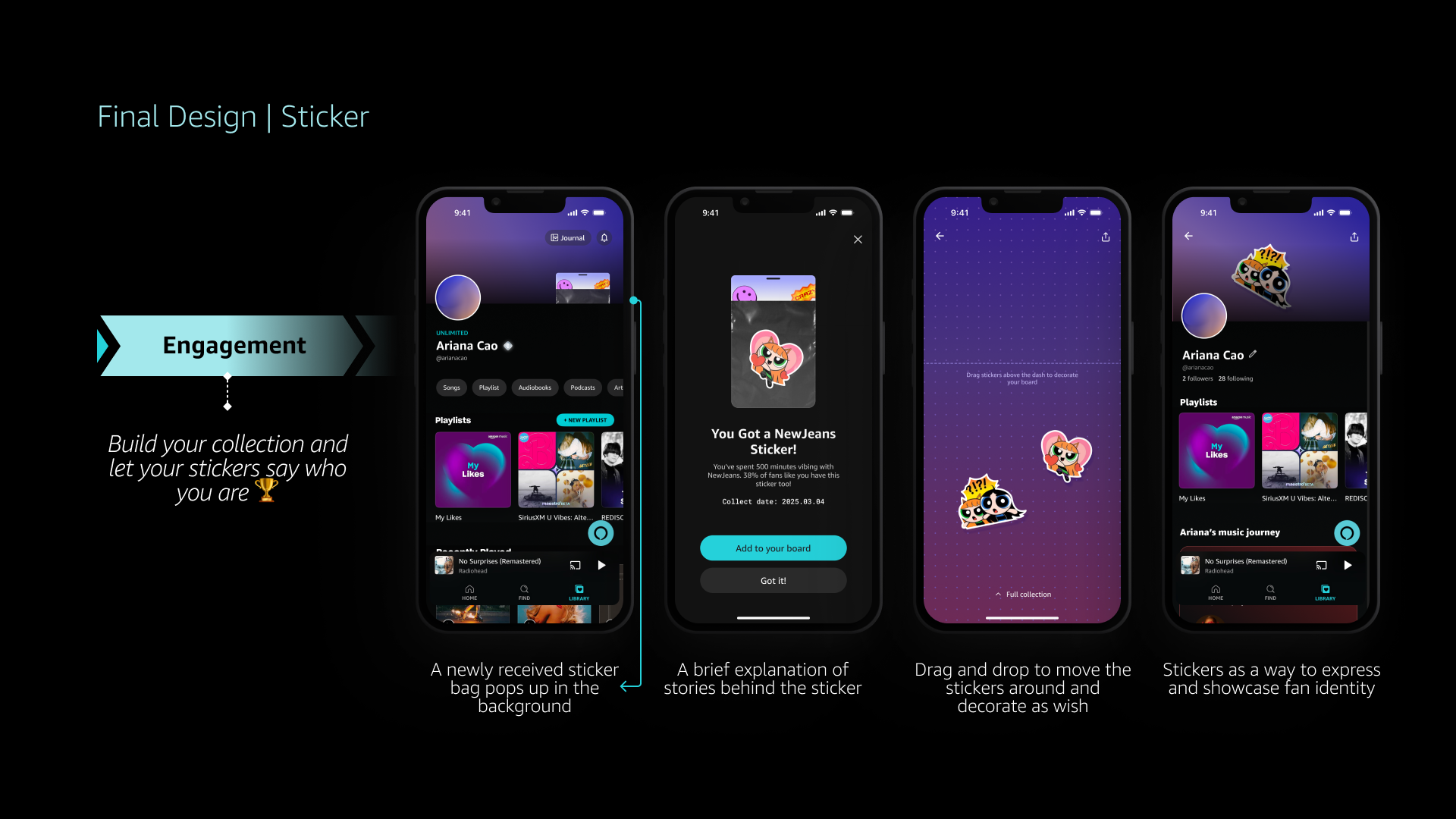
↳ Insight: Identity as social signal + deep artist loyalty in Amazon's user base
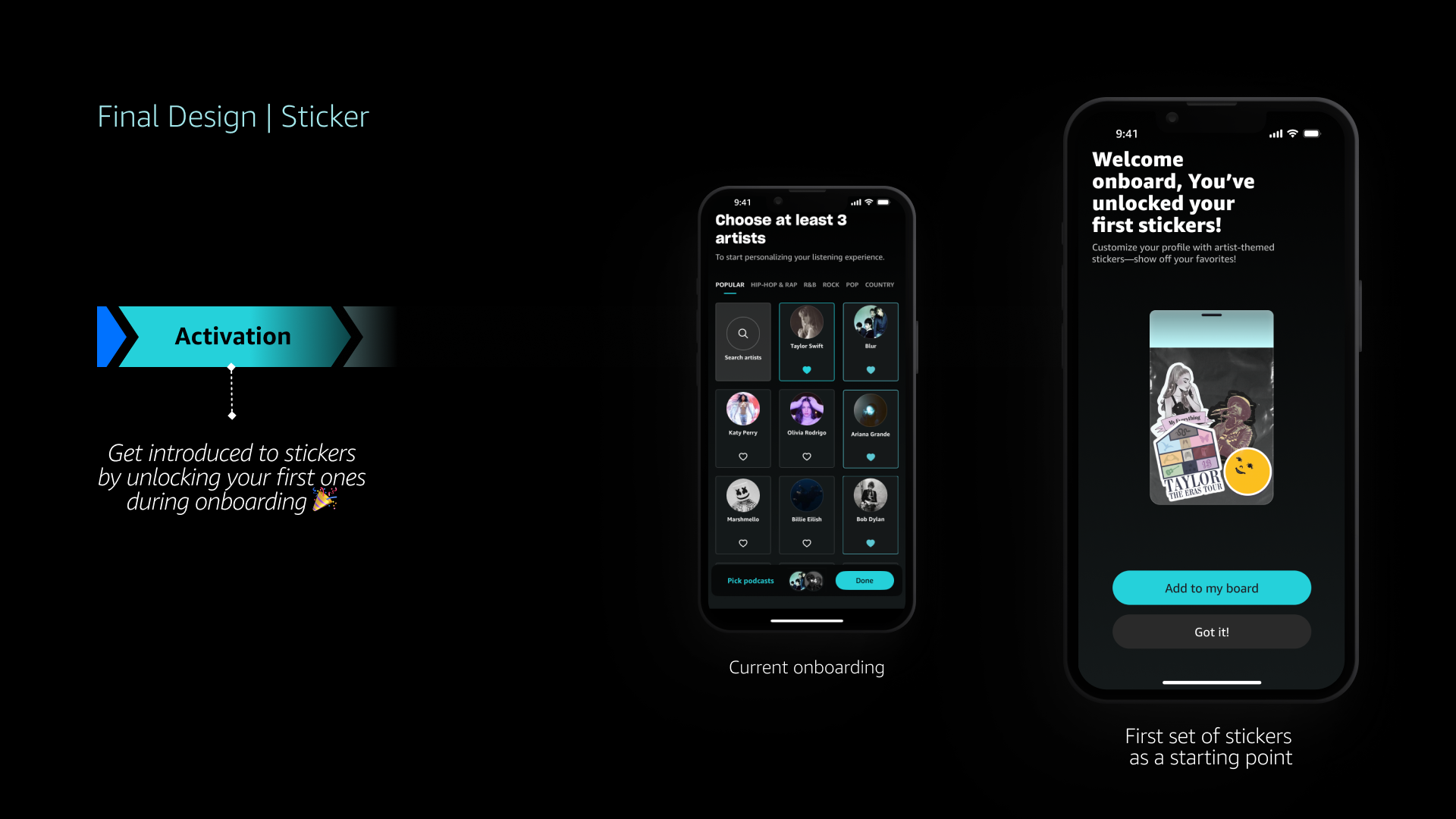
Stickers are collectible fan badges tied to real listening milestones. They surface gently without interrupting playback, then live on a personal board that expresses your music identity to others. Three moments: earning, collecting, and sharing.
Journey
Outcome
At the end of the sprint, our team presented EchoSoul to Se One Park, Principal Designer at Amazon Music. Although we weren't selected as finalists, Se One reached out personally to say our team's work stood out to him, and offered to invite us to present separately to the Amazon Music team. That meant more than the competition result.

Reflection
Three features in four weeks was ambitious, maybe too ambitious. We got far enough to tell a coherent story, but not far enough to pressure-test any one of them. Edge cases, onboarding, the harder emotional questions, none of that got answered.
Looking back, this would have been stronger as a 0-to-1 on a single feature. The EchoSoul loop is a compelling framing, but a loop made of three shallow features is still shallow. If I continued this, I'd pick Memory Journal and go deeper — really think through what the feature looks like at one month versus three years of use, how it handles music tied to difficult memories, what onboarding looks like for someone who already has years of listening history. Those are the questions that would make it real.
This sprint taught me that a well-told story and a well-designed feature are different things. I'm more comfortable with the former than I thought, and still working on the latter.