ClearStatusAI Digital Strategy Audit
Evaluating the client’s website, SEO performance, and competitive landscape to uncover growth opportunities and guide a data-driven strategy.
Background
What is ClearStatus AI?
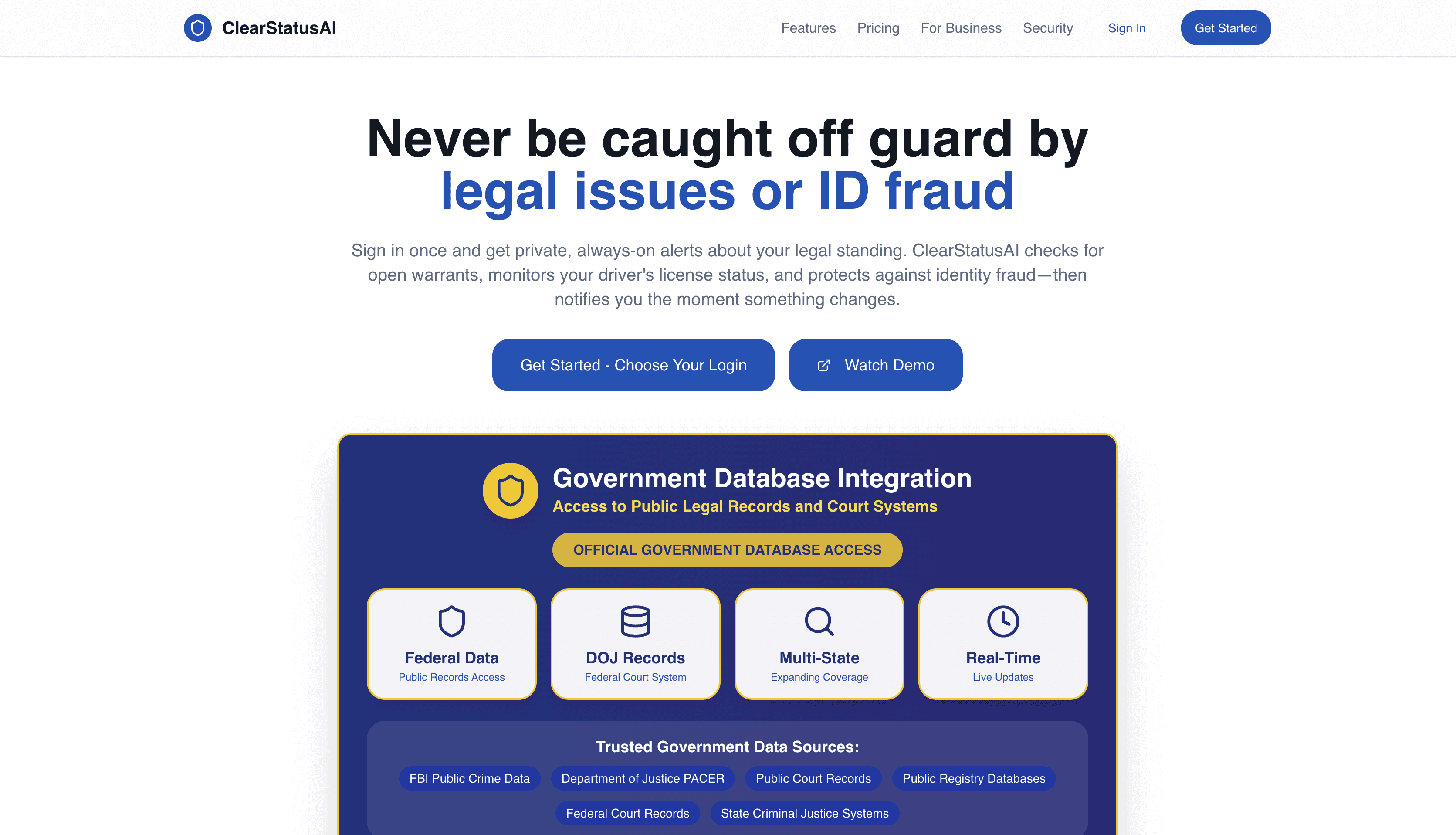
ClearStatus AI is an early-stage platform built at the intersection of identity verification and real-time legal status monitoring. Using AI and government database integrations, it provides continuous, 24/7 status tracking for both individuals and businesses.
Discipline
Digital Analytics
Platform
Website
Time Frame
1 Month
Background
What challenge are they facing?
As a new player in a crowded space dominated by giants, ClearStatus AI had strong technology but very little visibility. The brand wasn’t easily discoverable, and users had no clear path to find or understand the product. The company needed a focused strategy to build awareness and attract early traction—without the resources of established competitors.
Background
What did I contribute?
I led the competitor analysis and social strategy for this project. My work focused on uncovering where ClearStatus AI sits in the current market, what gaps exist between the product and user expectations, and where the biggest opportunities for growth are.
Together with the team, these insights informed the strategic directions we ultimately recommended to help ClearStatus AI build visibility and traction.
SEO Audit
Why wasn’t search traffic reaching ClearStatus AI?
Early technical SEO checks revealed several issues that prevented Google from properly crawling, rendering, and indexing key pages. Without a solid technical foundation, even strong content has difficulty being discovered.
Issue#1
Slow page load speed was hurting rankings and user experience.
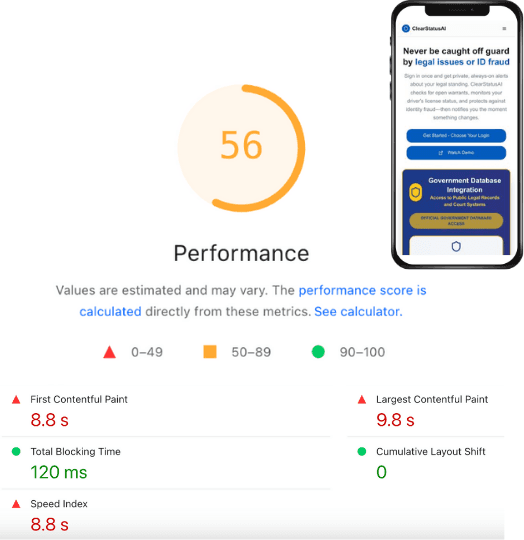
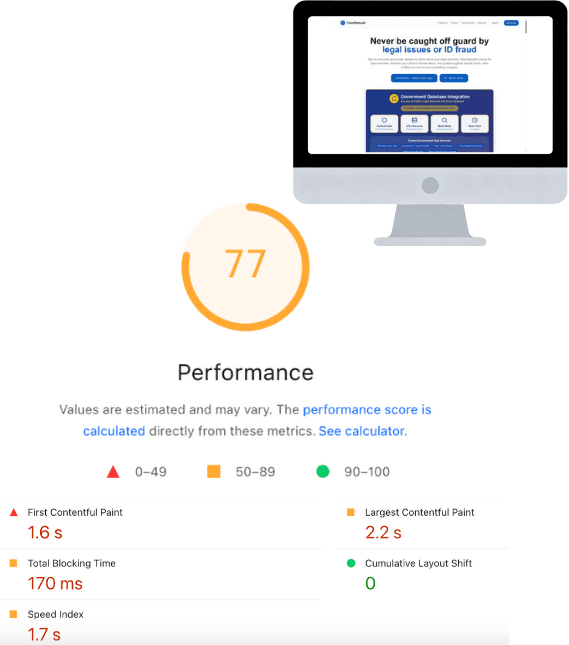
PageSpeed Insights showed that ClearStatus AI’s pages loaded slowly on both mobile and desktop. Slow performance reduces search visibility, increases bounce rates, and makes it harder for users to trust the site.
Recommendation #1
Improving Page Load Speed to Boost Visibility and User Experience
To address this, we recommended two key optimizations:
(1) extending cache lifetimes so returning visitors can load pages faster without repeatedly downloading the same resources.
(2) reducing unused JavaScript and CSS to shorten rendering time and prioritize critical content.
Issue#2
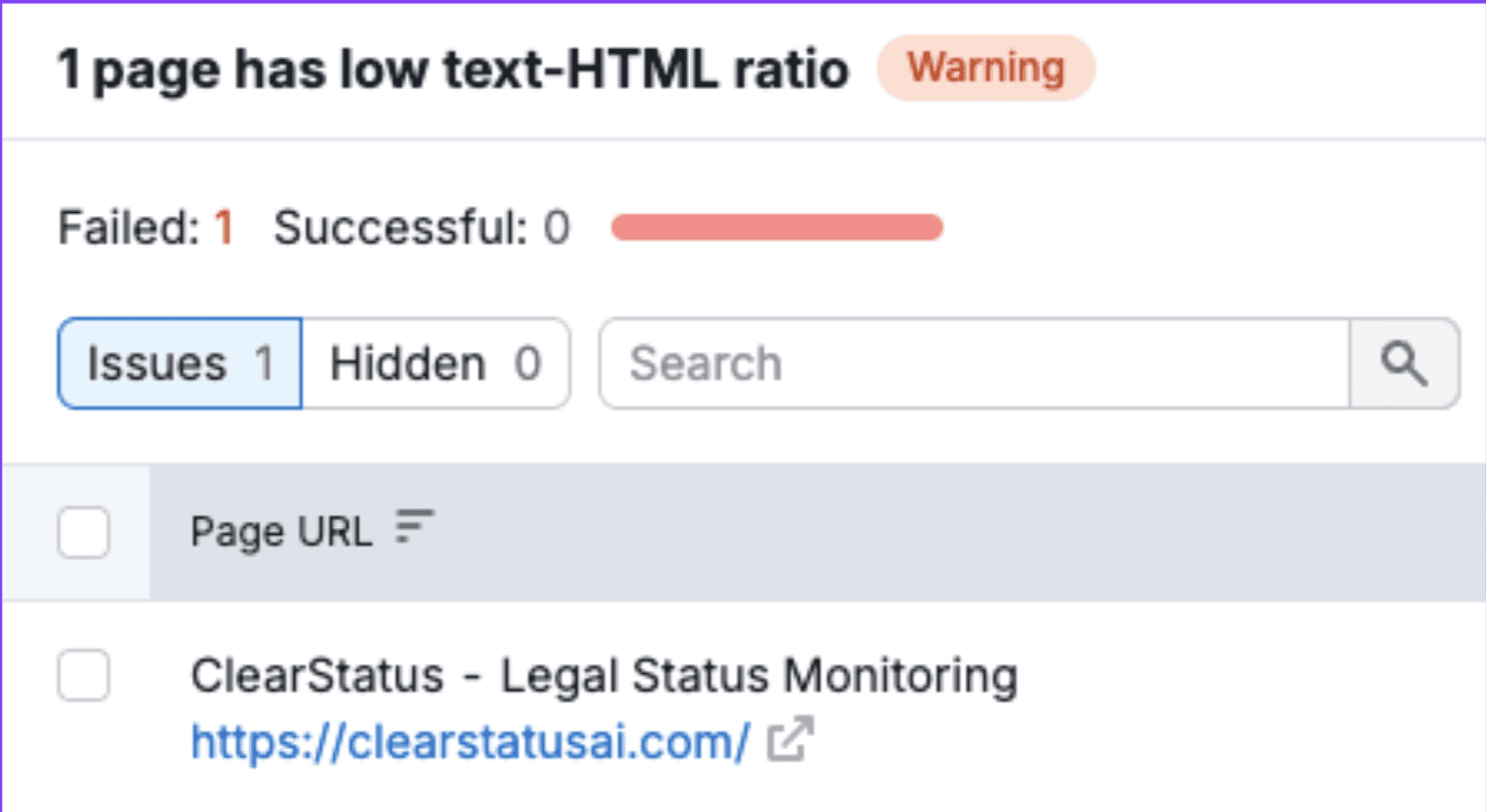
Low text-to-HTML ratio weakened ClearStatus AI’s search relevance
SEMrush flagged that ClearStatus AI’s pages contained very little readable text (10% or less), making it difficult for search engines to understand what the page was about. This reduced crawlability, weakened SEO signals, and limited the site’s ability to rank for important identity-verification and compliance keywords.
Recommendation #2
Add more meaningful, keyword-rich content to strengthen indexing.
To increase relevance and improve crawlability, we recommended expanding on-page content with clearer descriptions, user-facing explanations, and industry-specific information.
Suggested content additions:
Keyword-rich product descriptions and short user testimonials
Industry education pages (ex. “Driver Compliance Requirements Explained”)
Product explainers (ex. “How our instant ID verification works”)
Issue#3
The site lacked scalable structure and keyword-focused content.
While the homepage message was clear, the rest of the site didn’t follow a consistent on-page structure—missing optimized titles, clear H1s/H2s, and semantically rich content. This limited visibility, weakened topical authority, and made it harder for users and search engines to understand what each page offered.
Recommendation #3
Strengthen page structure and enrich content with relevant keywords.
We recommended adding clear, keyword-specific titles and descriptions, consistent H1/H2 hierarchy, and more descriptive service explanations and FAQs. These improvements make the content easier to read, improve accessibility, and help Google accurately index the site.
Key actions:
Add keyword-rich titles/descriptions for Services, About, FAQs
Use a single H1 per page with supporting H2/H3 sections
Enrich text with semantically related words (e.g., “legal status data,” “status monitor”)
Improve content readability and depth with natural keyword usage
Issue#4
ClearStatus AI had no backlink presence, limiting credibility and rankings.
The site had zero backlinks and no anchor-text diversity, making it appear low-authority to search engines. Without any external signals of trust or relevance, ranking for competitive identity-verification and compliance keywords was nearly impossible.
Recommendation #4
Build a content foundation that earns organic backlinks and authority.
Link building cannot happen without strong, crawlable pages. We recommended publishing resource-style content and launching a content program to naturally attract backlinks over time.
Key actions:
Publish new crawlable pages (Services, Resources, FAQs) to increase linkability
Launch educational content (blog posts, guides, compliance explainers)
Earn backlinks through thought leadership: press features, founder interviews
Create content hubs that Google can associate with key industry topics
Competitor Analysis
Understanding the Market Landscape
To understand where ClearStatus AI could realistically win, I first mapped the broader industry landscape. The identity verification and background screening space is mature and dominated by well-funded players with strong SEO authority. While ClearStatus AI has solid technology, it operates with low visibility in a search-driven market.
The Space
Operating in identity verification, background screening, and comliance automation
The Status
High-volume, SEO-heavy, and owned by established brands
ClearStatus AI’s Position
Technically strong, modern, AI-driven—but not yet discoverable
Competitor Analysis
How Competitors Are Positioned
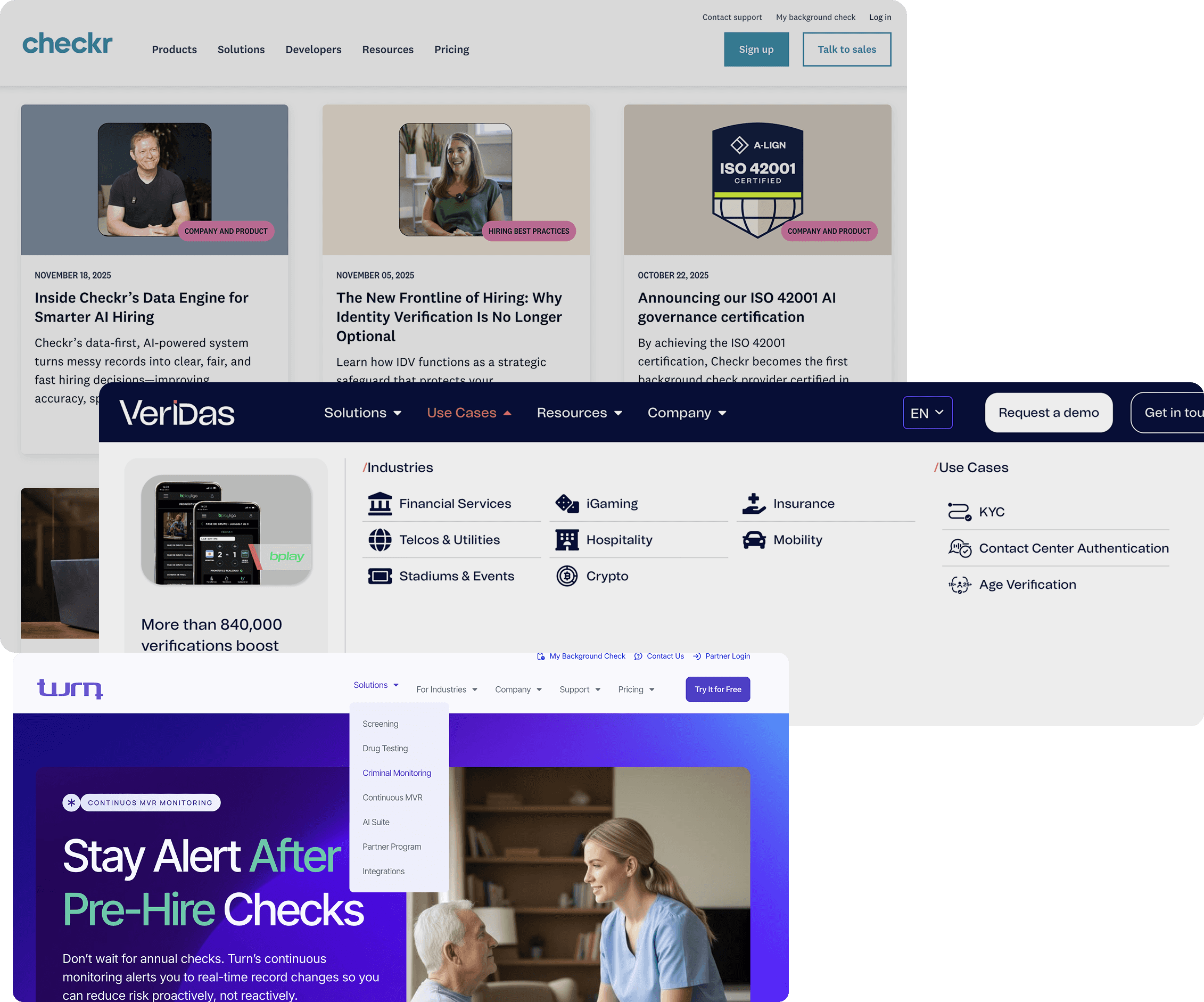
I analyzed four leading competitors to understand how they communicate value, structure their content, and build search authority. Each competitor revealed a different angle the market rewards.
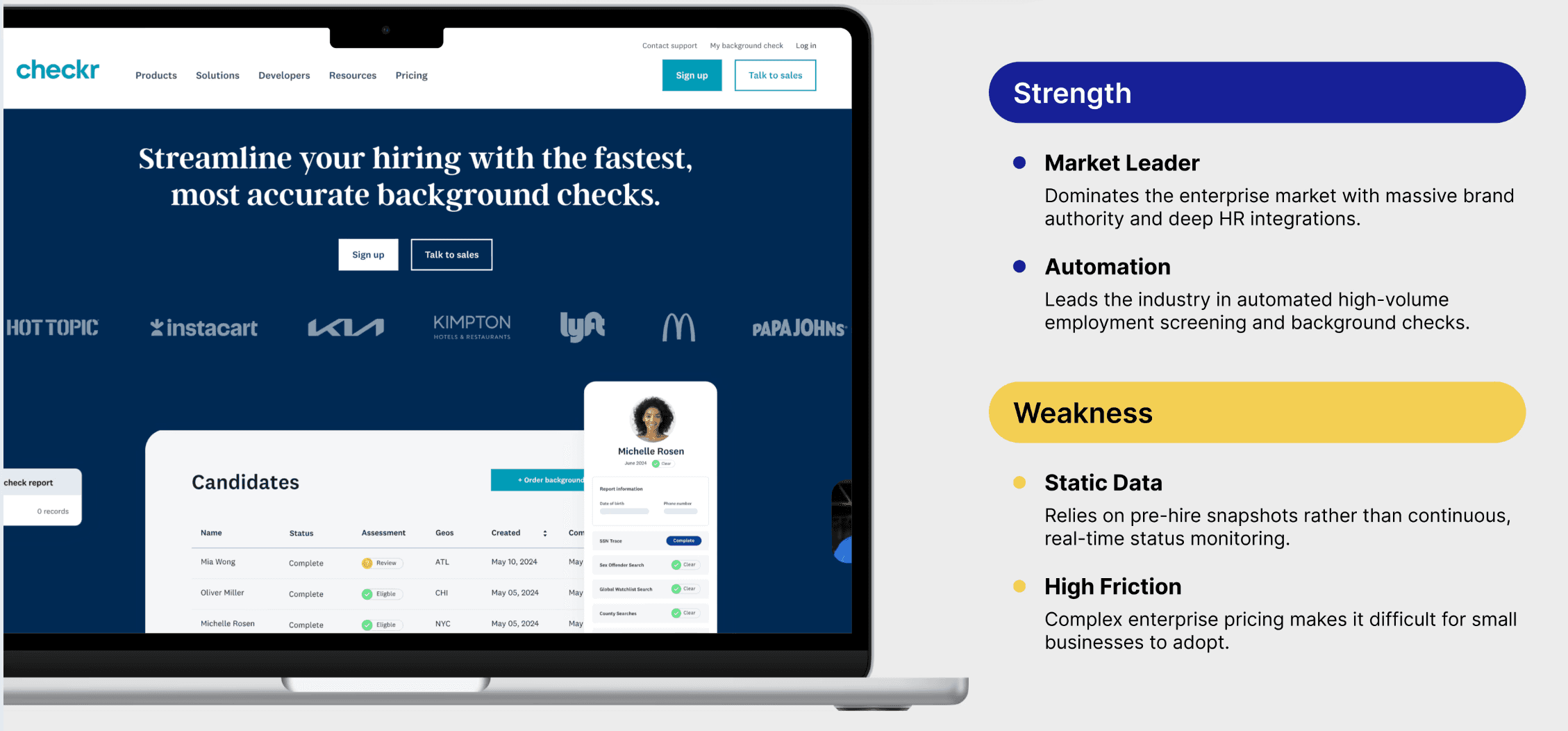
Owns the space through scale, high-volume content, and strong domain authority. Their visibility sets the benchmark.

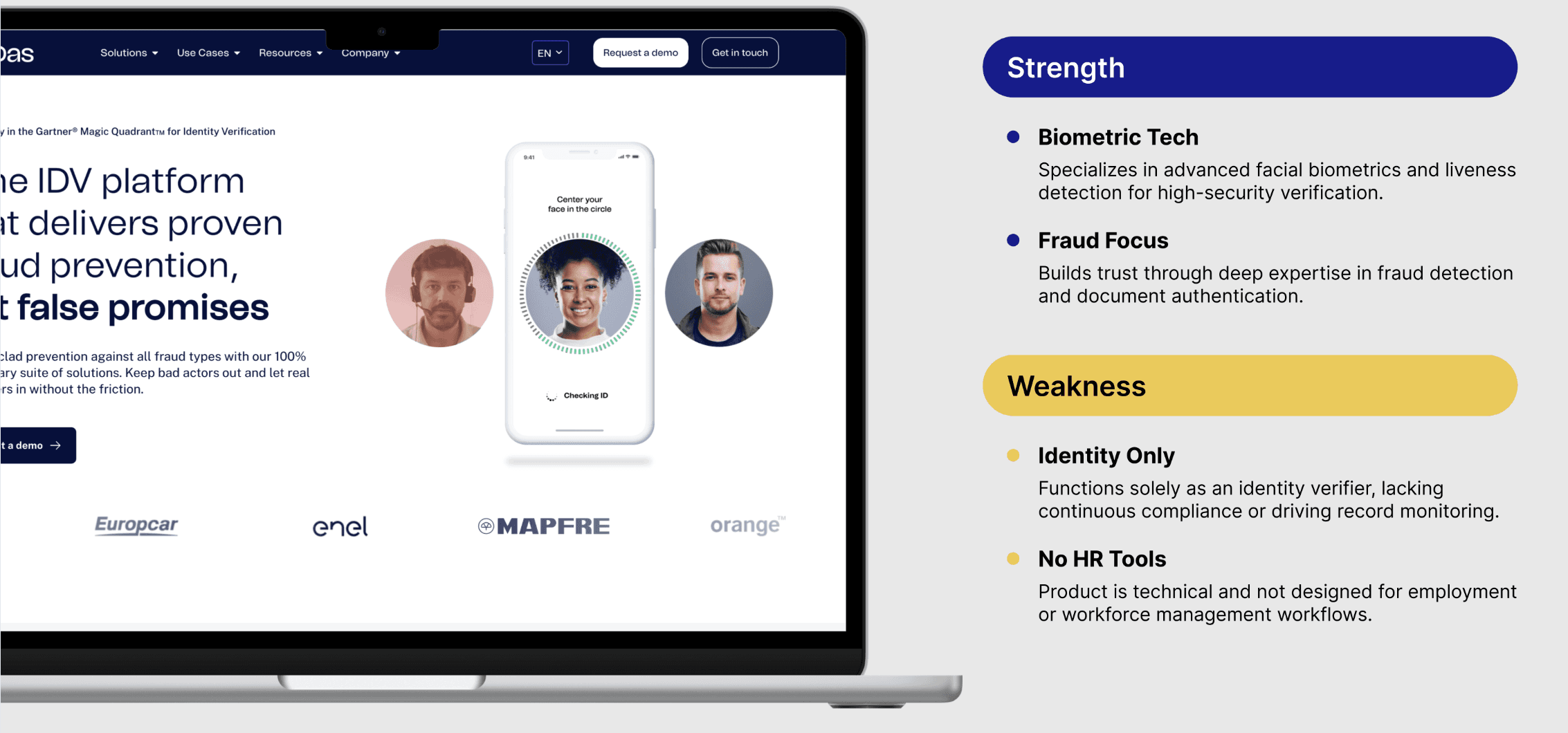
Focuses on biometric identity and security. Wins through technical authority rather than broad keyword coverage.

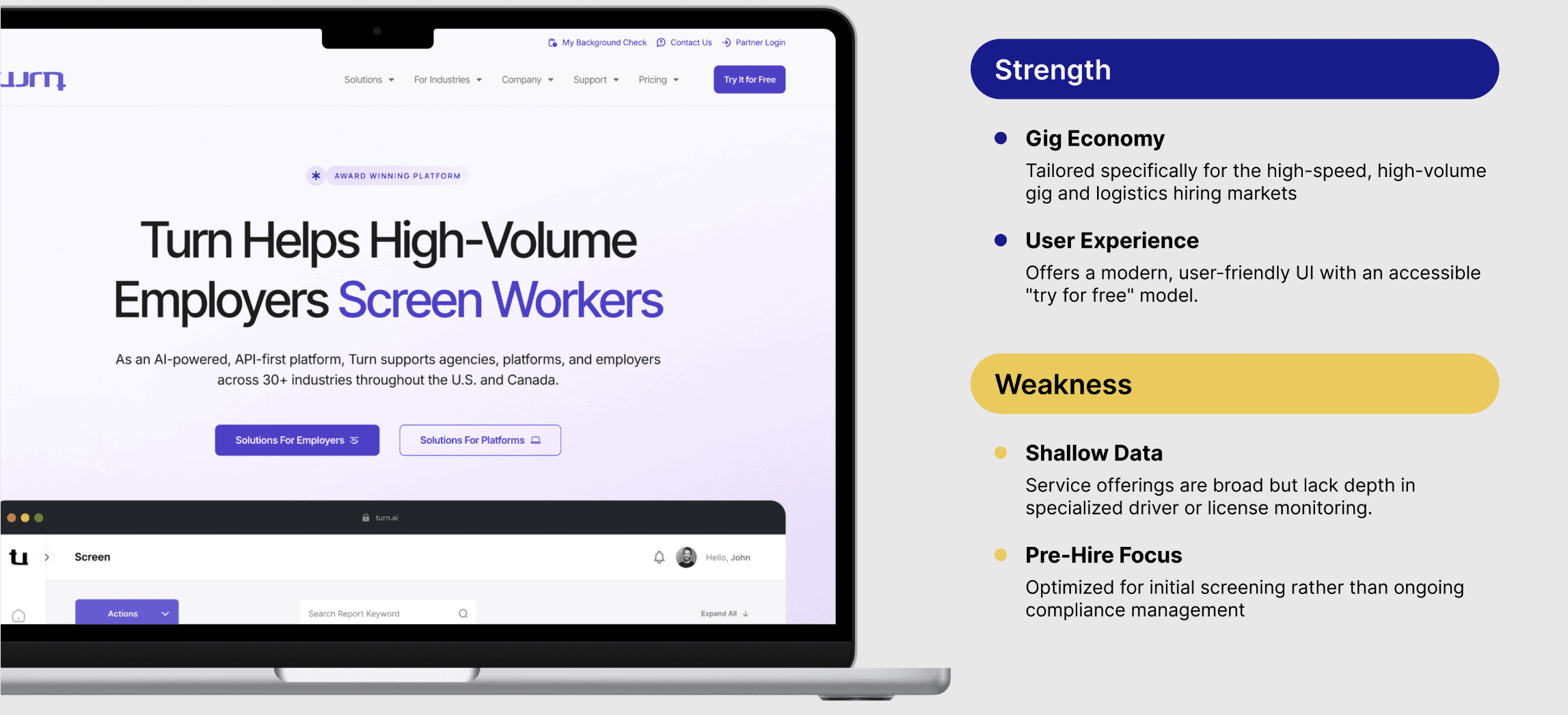
Targets high-turnover industries with specific hiring needs. Ranks well for narrow, high-intent terms.

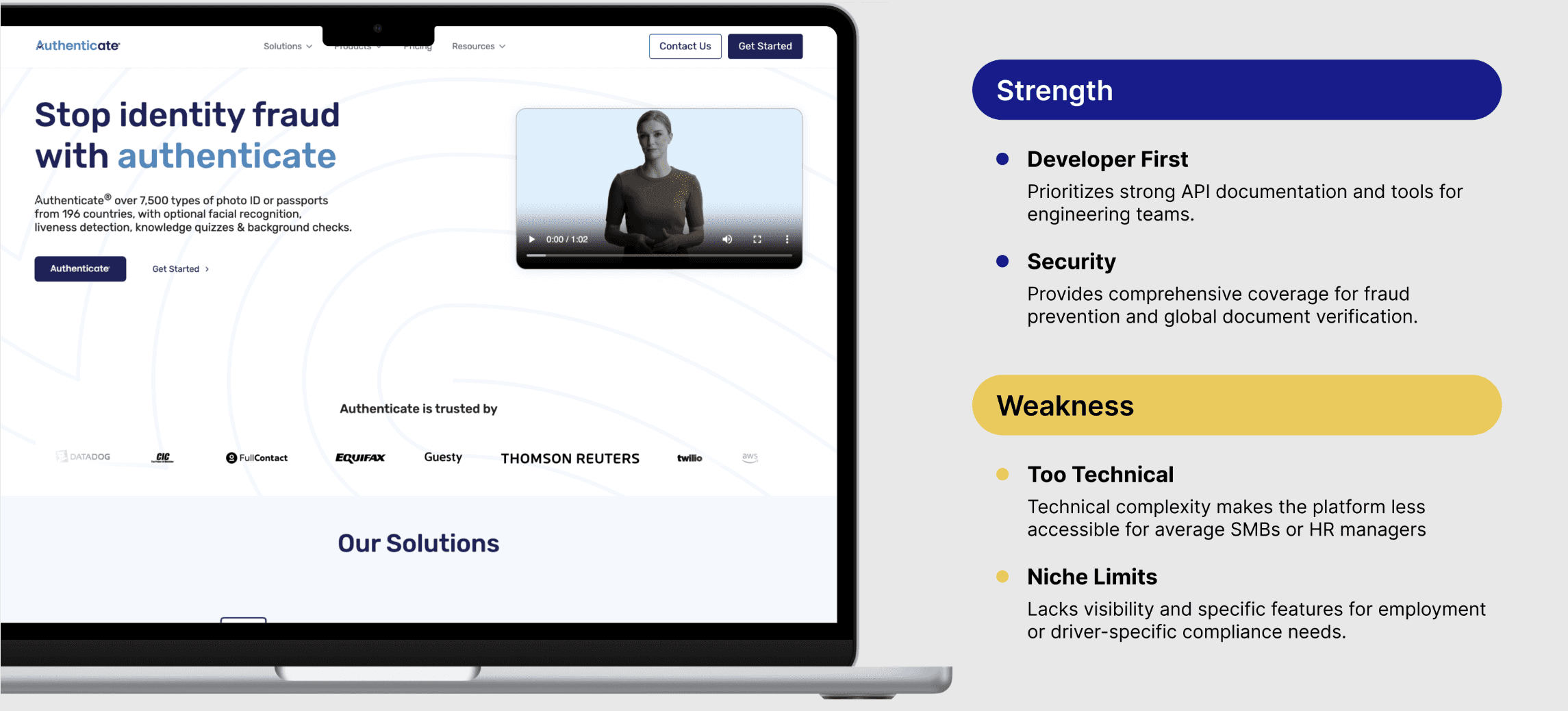
Blends identity verification with background checks and positions itself clearly for engineering teams. Simple, structured content gives them strong SEO traction.
Competitor Analysis
The site lacked scalable structure and keyword-focused content.
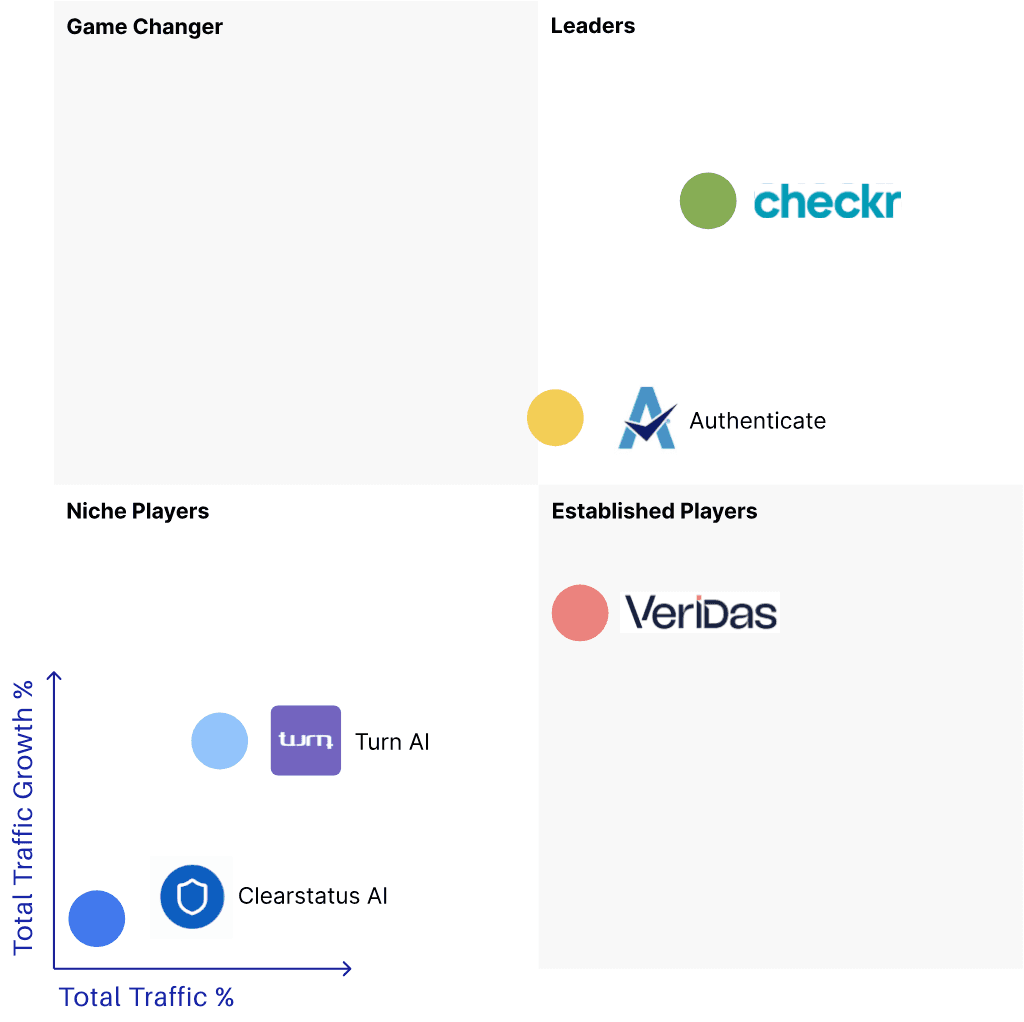
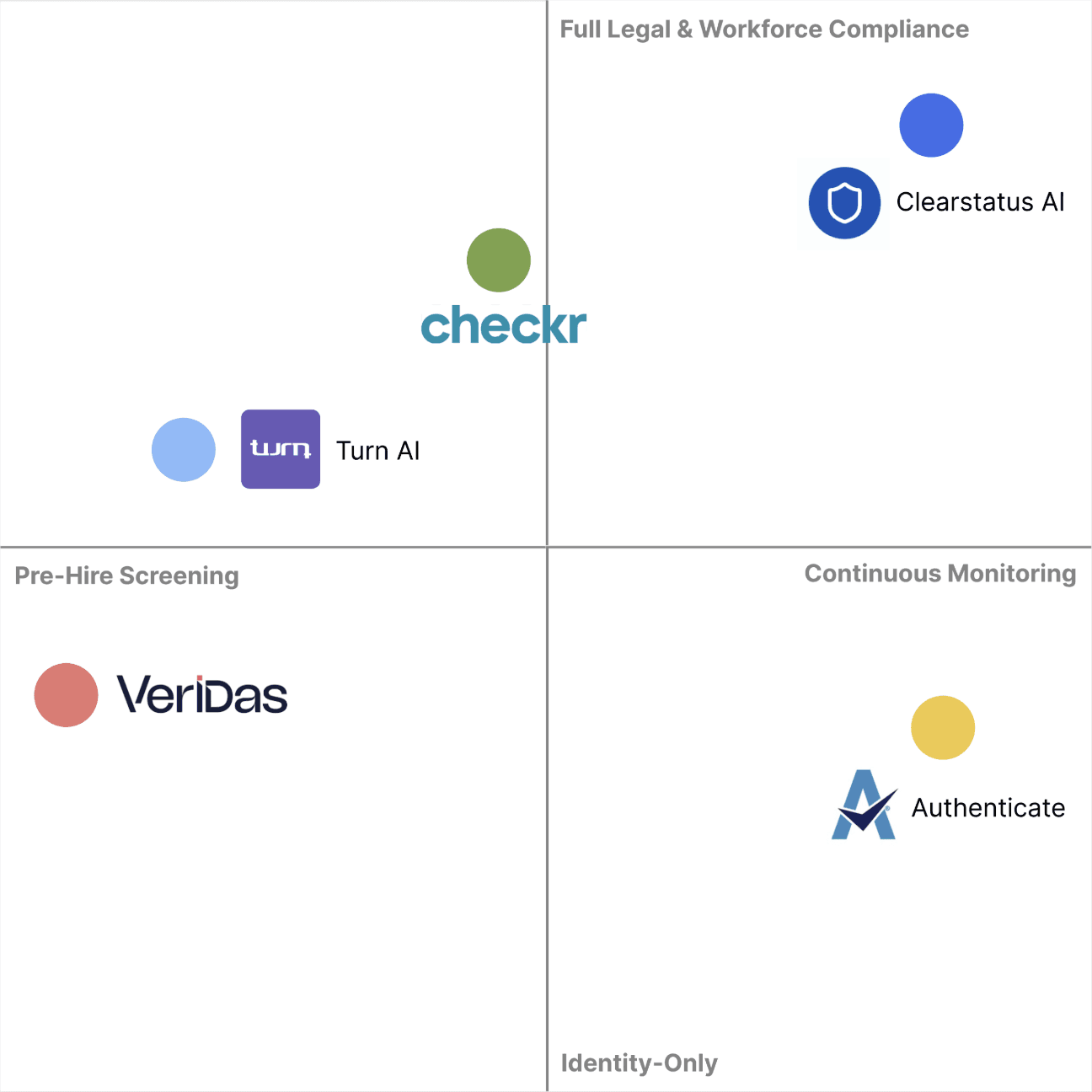
When mapped against competitors, ClearStatus AI sits in the early-stage, low-visibility quadrant. Others lead through volume, specificity, or authority. ClearStatus AI’s opportunity lies in sharpening positioning and building the content needed to compete in search.
Competitor Analysis
What stood out across competitors?
A closer look at product strengths and weaknesses revealed where ClearStatus AI is uniquely positioned—and where it struggles against more established players.
Competitor Analysis
Key Takeaways
The market is split between enterprise HR platforms and pure identity/fraud tools.
No competitor truly owns continuous, cross-domain compliance monitoring the way ClearStatusAI is positioned to.
Most solutions are still pre-hire or one-time verification focused, not lifecycle monitoring.
Competitor Keyword Patterns
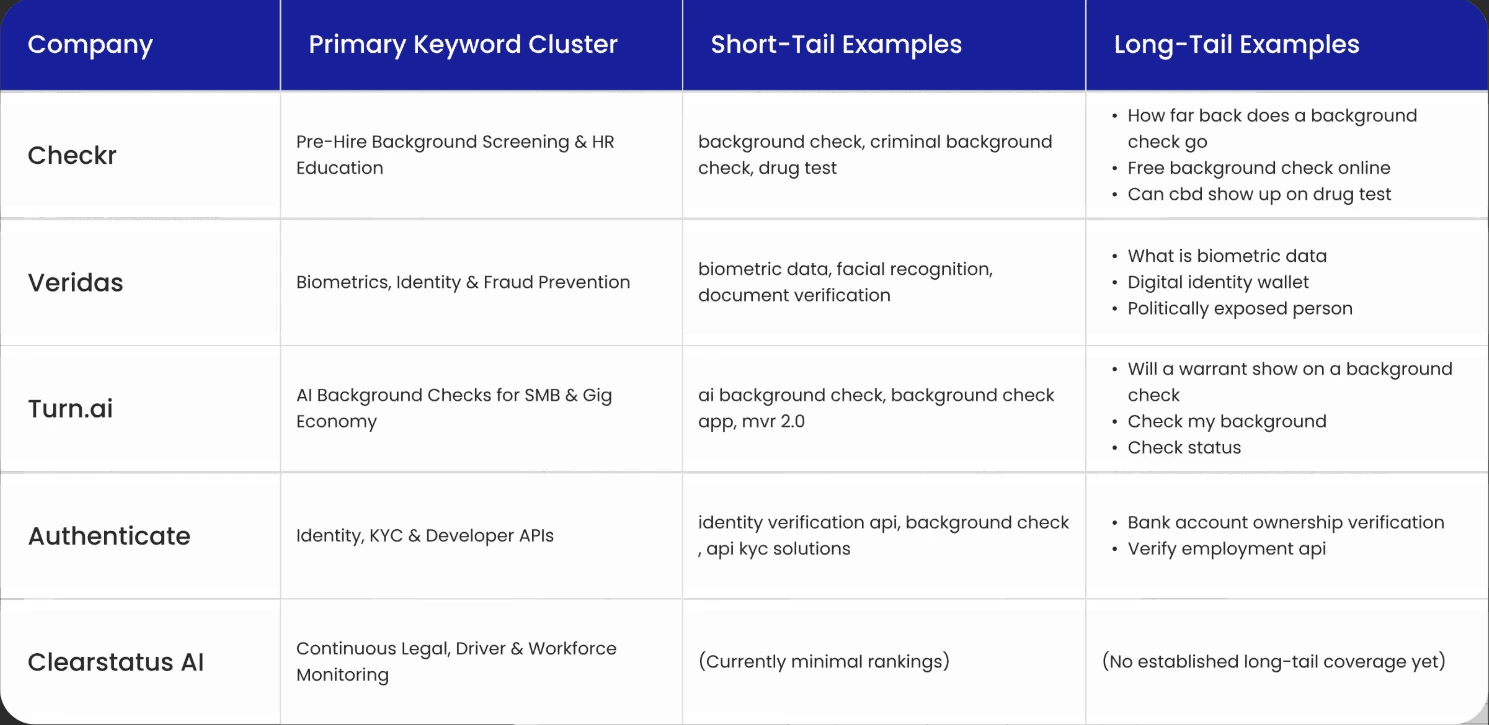
Competitor keyword patterns show how each brand positions itself:
Checkr dominates high-volume, generic terms (“background check”) and pulls in early-stage searchers.
Veridas owns technical identity keywords (“biometrics,” “facial recognition”).
Turn.ai captures gig-economy compliance and SMB screening terms.
Authenticate attracts developers with API/KYC queries.
ClearStatus AI currently has no meaningful organic presence across any cluster.
Insight: Competitors anchor themselves in clear keyword verticals. ClearStatus AI has an opportunity to define its own.
Keywords opportunities
Across the data, a clear opportunity emerges:
continuous monitoring terms have demand, low difficulty, and no established owner.
Examples:
“continuous background check”
“real-time legal status monitoring”
“employment compliance monitoring”
These keywords map directly to ClearStatus AI’s differentiator and can become the foundation of a new category.
Competitor Top Pages
Top pages reveal how competitors grow:
Education-first content wins traffic. High-ranking pages answer questions like “How long does a background check take?”
Industry-specific guides attract high-intent users. Logistics, healthcare, gig hiring, and fintech are common themes.
Developer docs drive technical adoption for API-heavy products.
ClearStatus AI lacks equivalent educational and vertical-focused pages—leaving major visibility gaps.
Content Strategy Recommendations
Based on gaps and opportunities, ClearStatus AI can grow through:
Social Analytics
Overview
ClearStatus AI currently has no social media presence. Instead of a performance review, this section establishes a foundation for building social from zero—defining the audience, strategic goals, and the platforms and content formats that will create early awareness and long-term credibility.
Social Analytics
Strategy Foundation
Primary Audience:
Individuals and small businesses who need ongoing visibility into legal, identity, and workforce compliance. These users value clarity, safety, and proactive alerts—so social content must feel trustworthy and educational.
Business Goal:
Establish early brand awareness and credibility. Since continuous monitoring is a new category, social must help ClearStatus AI become a recognizable, reliable resource.
Strategy Goal:
Use educational, trust-building, and scenario-based content to position ClearStatus AI as the authority on real-time compliance monitoring.
Social Analytics
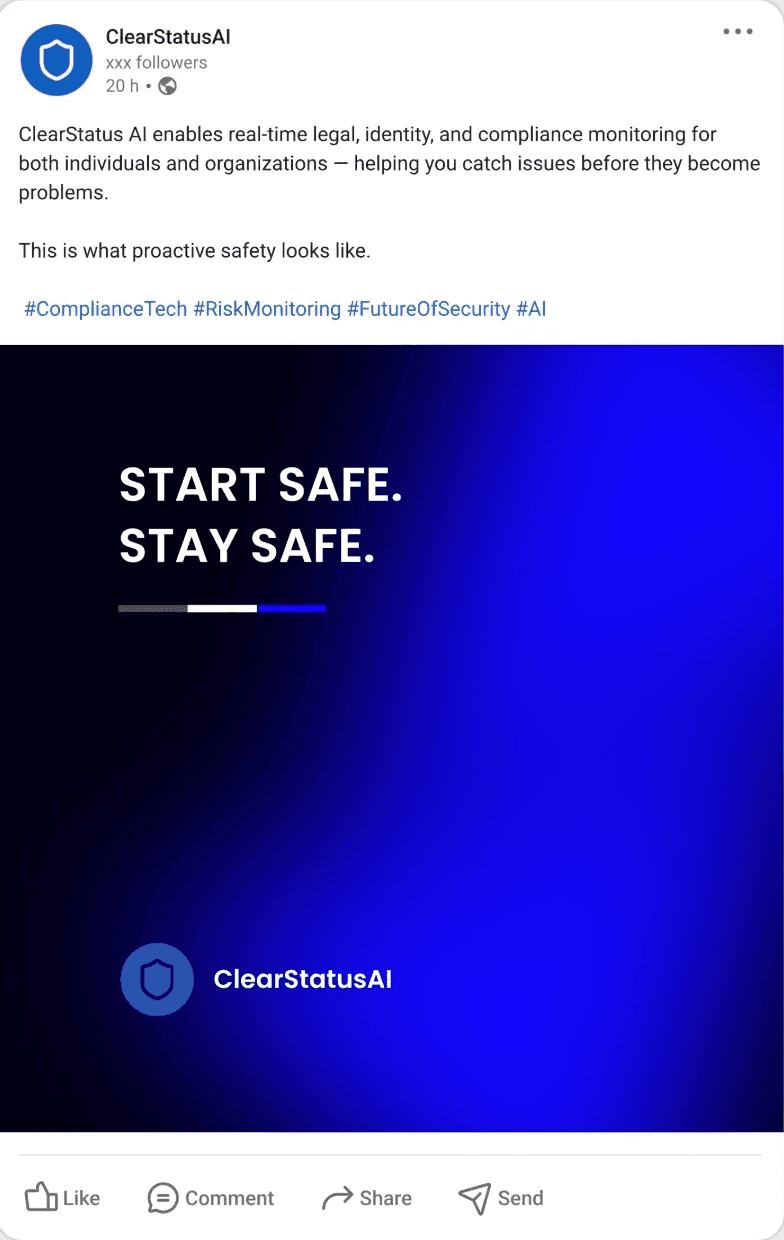
LinkedIn is the strongest channel for reaching the right audience
Competitive research showed that major players like Checkr and Authenticate already shape industry conversations on LinkedIn — the platform where HR, compliance, and operations leaders actively look for guidance.
For an early-stage B2B product, LinkedIn offers the fastest path to visibility and trust.
Why LinkedIn
Direct access to decision-makers in HR, compliance, and SMB operations
Performs well for educational, expert-driven content
Ideal for thought leadership around safety, risk, and legal monitoring
What to publish
Simple compliance explainers
Industry-specific use cases
“Before vs. after monitoring” scenarios showing real value
Social Analytics
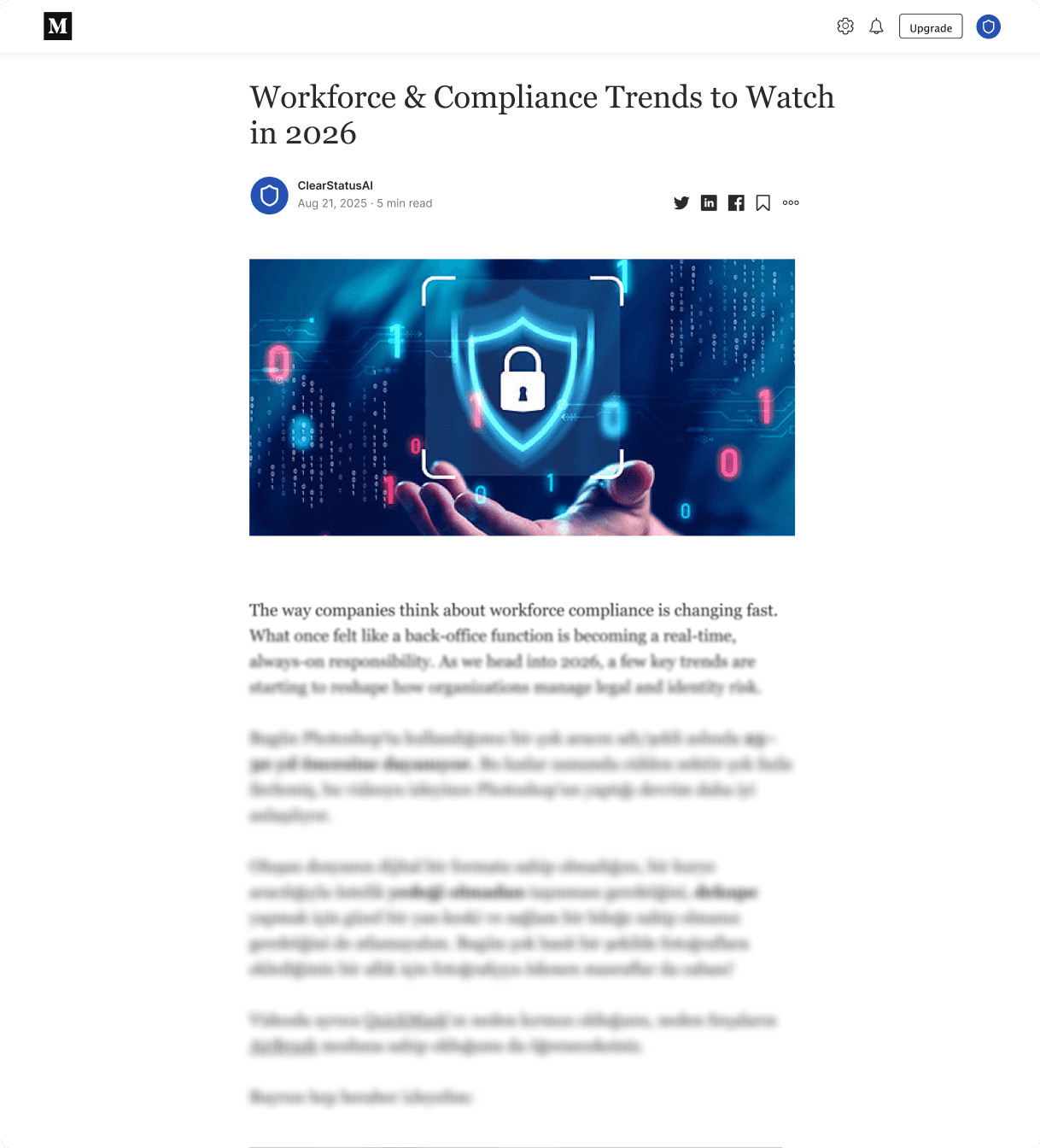
Using Publishing Platforms to Build High-Trust Authority Early
Because ClearStatus AI should build both awareness and understanding, short posts aren’t enough. We need channels that reward expertise.
Platforms like LinkedIn Articles, Medium, and guest posts provide that credibility.
Social Analytics
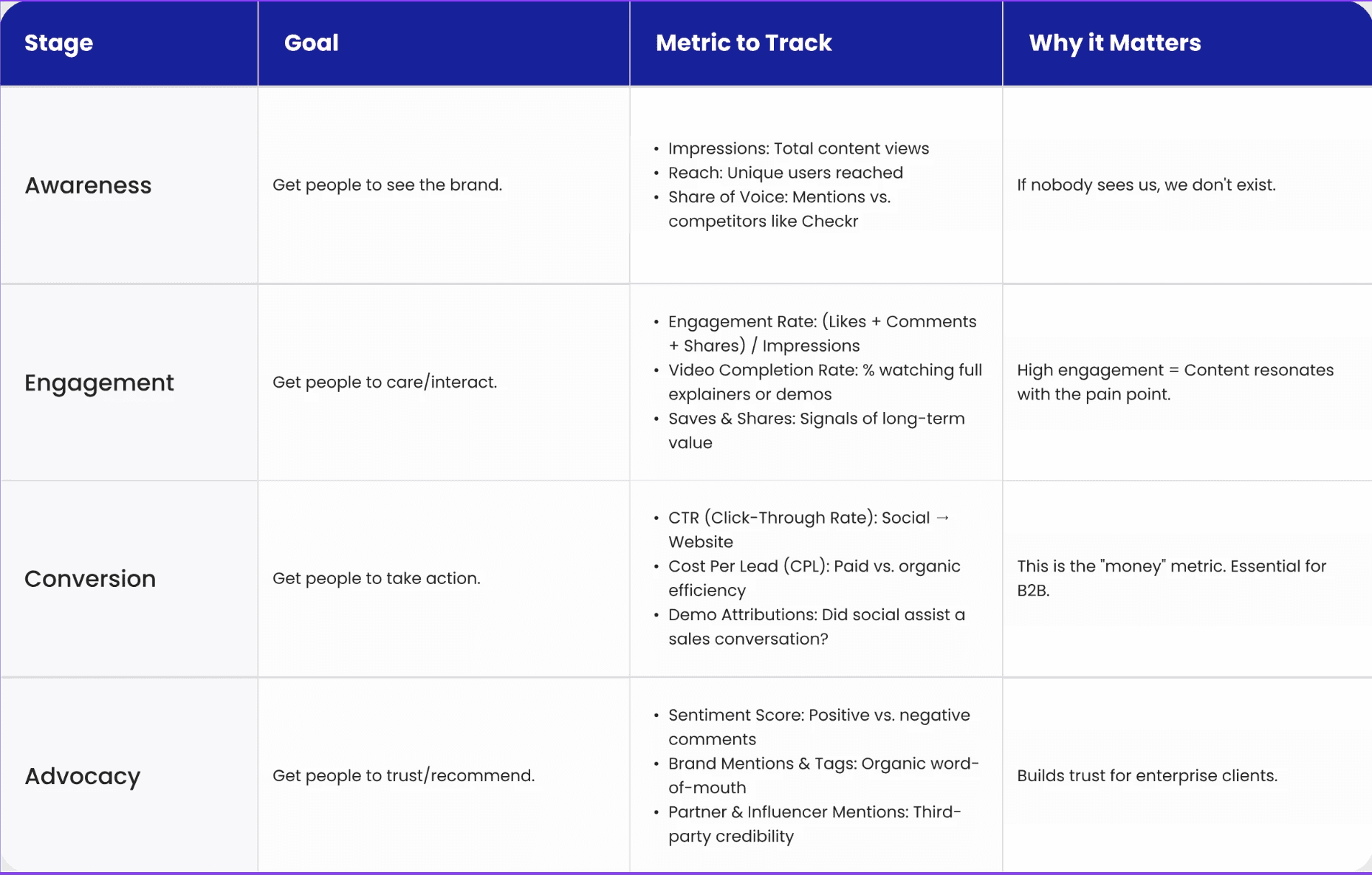
To measure progress realistically, we created a four-stage framework that aligns with the brand’s growth curve:
To measure growth realistically for a brand starting from zero, the metrics were organized into four stages—awareness, engagement, conversion, and advocacy. This structure makes progress visible even when follower count or traffic is initially low.
Social Analytics
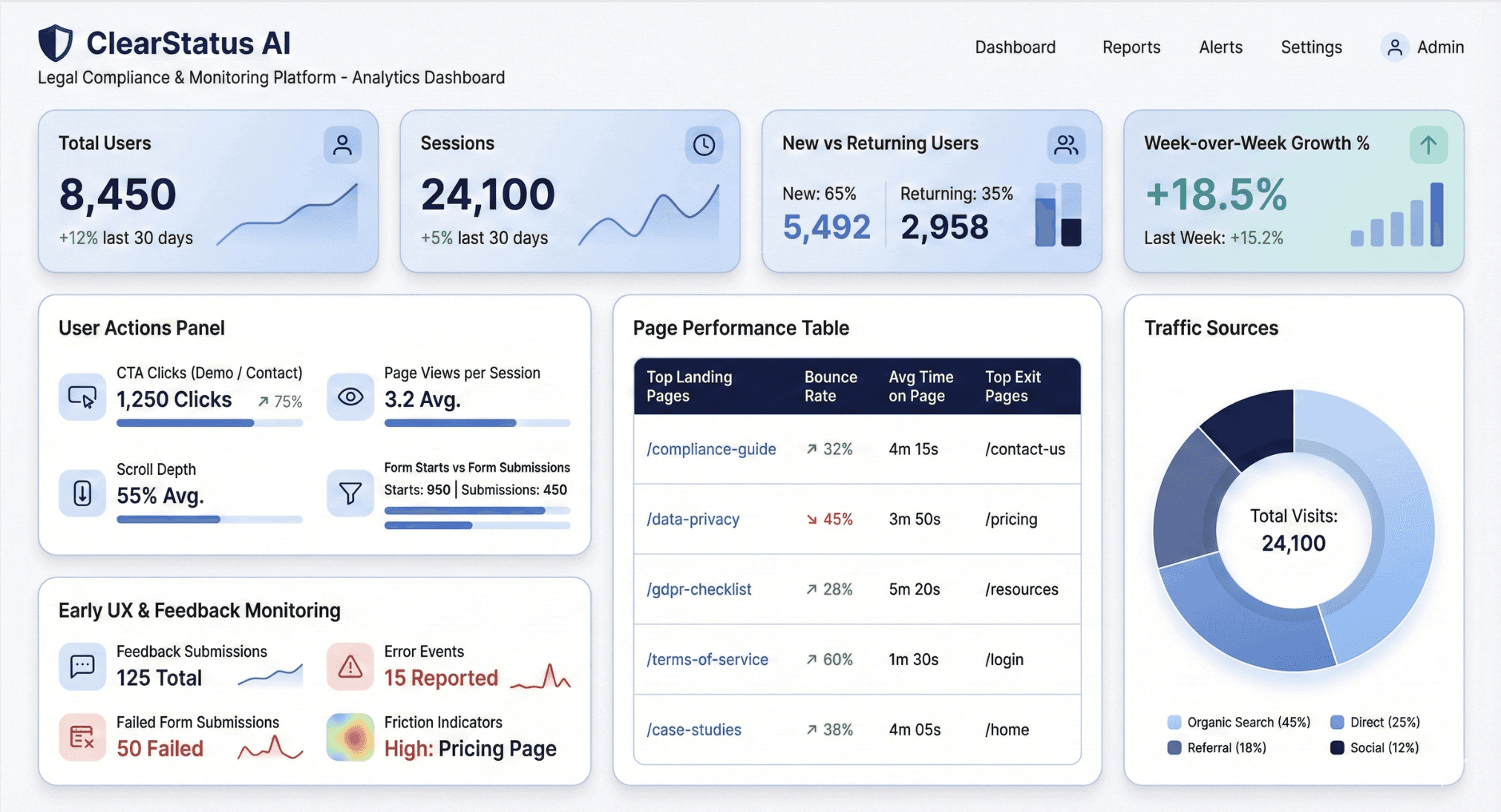
A dashboard designed to surface the signals that matter most
To support an early-stage product with limited data history, we designed a dashboard that highlights only the metrics tied directly to growth, user behavior, and product-market fit. Instead of overwhelming stakeholders with exhaustive charts, the layout focuses on actionable insights—how users arrive, what they do on the site, where they drop off, and which pages drive the most value. This structure helps the team quickly spot friction, track adoption patterns, and make informed decisions as the platform scales.
Conclusion
Strengthen the Foundation
To make ClearStatus AI discoverable, the first priority is establishing a solid foundation. This includes fixing crawlability and indexability issues, improving on-page structure, and implementing an analytics setup aligned with real search behavior. Together, these steps ensure the site is technically sound and measurable, allowing future content and SEO efforts to perform.
Build Content That Matches User Intent
The next opportunity lies in creating meaningful, search-aligned content. This means building a resource center that educates users on compliance and monitoring, and developing industry-specific pages that reflect the problems different sectors face. These content pillars allow ClearStatus AI to compete with high-authority brands by offering depth, clarity, and relevance.
Grow Authority and Brand Presence
Finally, the brand needs credibility signals. Strengthening the backlink strategy through partnerships, thought leadership placements, and high-value compliance publications will improve domain authority. Paired with emerging social presence (especially on LinkedIn), this positions ClearStatus AI as a trustworthy voice in compliance and real-time monitoring.
More Case Studies